Blog
Latest insights and updates from our team
Featured Articles

Do You Need a Permit for a Shed in California?
The shed kit is in the driveway and a neighbor just asked if you pulled a permit. Good news: California exempts small one-story sheds from building permits — the line is 120 square feet. The catch is what the exemption doesn't cover.

How Close to the Property Line Can You Build in California?
Your contractor says five feet, a neighbor swears he built right on the line, and the internet says thirty. All three can be right — three different rulebooks stack on the same lot line, and the strictest one wins.

How California's 2025 Building Codes Work — Who Writes Them, Who Can Change Them
Halfway through planning your project, someone says "that changed in the new code." Which code? California's building rulebook is actually thirteen books, rewritten every three years — and your city is allowed to make them stricter, but never looser.
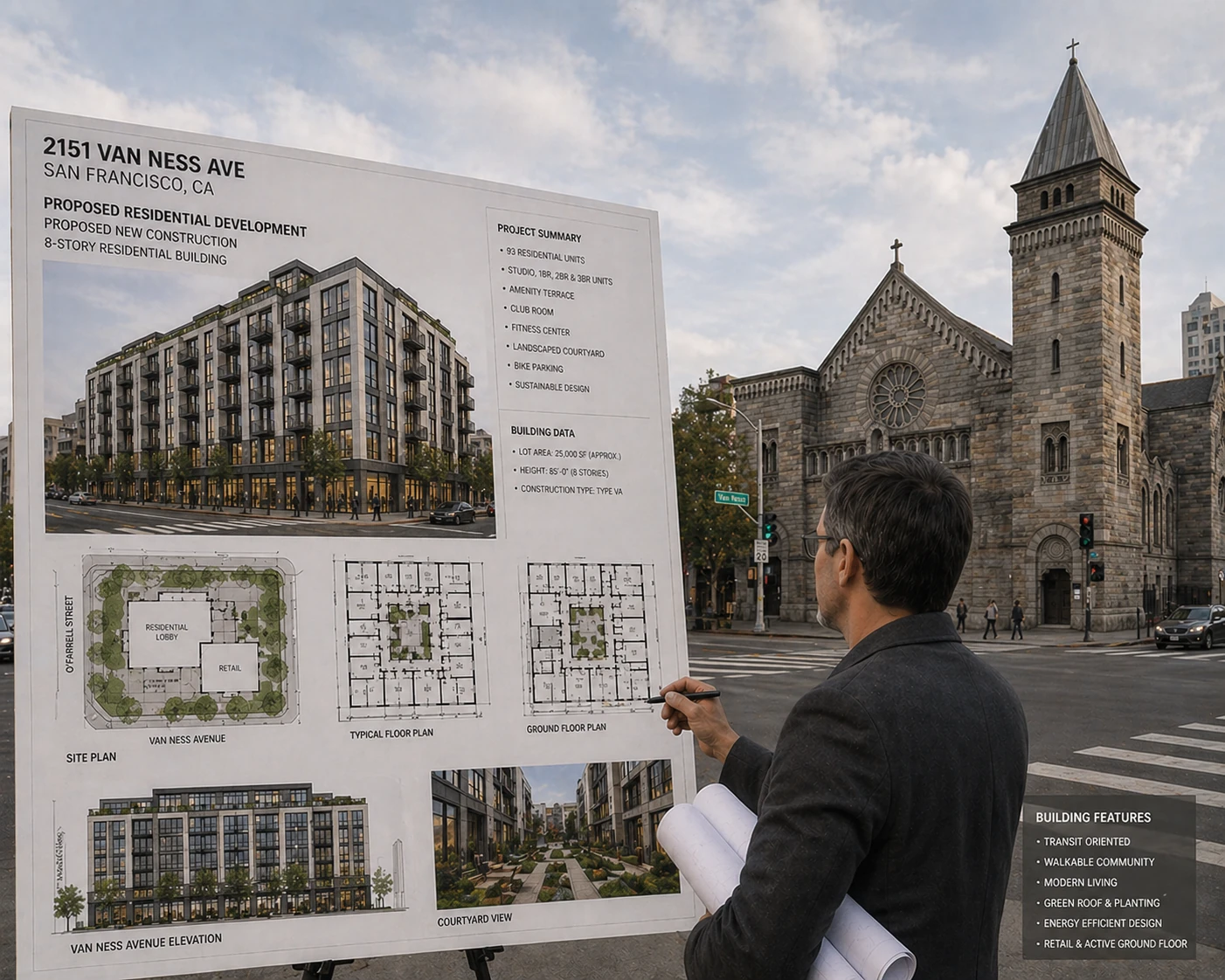
From Church to Housing? Inside the $4.7M Sale of a SF Landmark
A historic San Francisco church at 2151 Van Ness Ave has sold for $4.7 million. We explore whether the site can be redeveloped into residential housing, including zoning constraints and preservation challenges.

San Francisco Runs Two ADU Programs. Which One Is Yours?
San Francisco has a local backyard-home program and a state-mandated one, and the code decides which you get. One is faster with a size ceiling; the other has no unit cap on larger buildings but adds tenant-protection review.

Working from Home: How to Legally Build a Home Office
To install a home office in a single- or two-family dwelling in California, you must comply with both statewide (California Residential Code) and local (such as San Francisco Planning Code) rules. The California Residential Code does not prohibit a home office, but any work must retain the residential character of the space.
All Articles

Who Makes the Zoning Rules for Your California Property?
If you went looking for California's zoning rules and came up empty, that is not your fault. State law deliberately leaves almost every rule about your lot to your own city or county, and it says so in writing.

Can Your Garage Become a Living Room? Start With the Ceiling
Most garage conversions are decided by three numbers before anything else: the ceiling height, how much glass the room needs, and how much of it opens. And the permit reaches back into bedrooms you were not touching.

Planning an ADU in Santa Barbara? Pick the Right Rulebook
Santa Barbara runs two sets of accessory dwelling unit standards — one for a single larger unit, one for smaller units that let you build more than one. Which you pick decides your size, your height, and whether a coastal permit is in your future.

Flame Spread Index: The Fire Number on Your Insulation Label
Every piece of insulation and every wall panel that goes into a California house carries a tested fire number. The code sets different ceilings for different materials — 25 for insulation, 200 for wall and ceiling finishes — and the product you picked has to clear the right one.

Los Angeles Has 60 Days to Answer Your ADU Permit
An ADU permit in Los Angeles is decided at a counter, not a hearing, and the city is on a clock the whole way: 15 business days to call your application complete, 60 days to approve or deny it. Here is what those deadlines require, and what happens when the city misses one.
Two Buildings on One Lot: Where the Imaginary Line Goes
With two buildings on one lot, the distance that prices the windows is measured to a line the drawing places, not to the open court San Francisco sizes. Here is the chain, quoted from the code itself.

Can You Keep Original Glass in a Historic Building?
Ordinary rules send old glass in a hazardous location to the skip. For a qualified historical building, California allows the original glazing to stay when protective measures are added and the building official agrees.

Remodeling a Business? When Accessibility Upgrades Kick In
Altering part of a commercial building in California requires an accessible path of travel to the work — entrance, restroom, drinking fountain and signs included — with the cost of that path work capped at 20 percent.

Do Your Upstairs Windows Need Fall Protection in California?
California requires fall protection on a window whose sill sits low inside and high above the ground outside — and simply replacing an old window can trigger the rule on its own.

Does Your Project Qualify for SB 35 and SB 423 Streamlining?
California lets qualifying multifamily projects skip the conditional use permit and discretionary review entirely — but only if the project meets every one of the state's objective standards. Here is the checklist.

Where Your Building Needs Fire Extinguishers in California
California requires extinguishers by occupancy, within 30 feet of commercial cooking equipment, and wherever flammable liquids are handled — then sets how big they must be and how far apart, by hazard level.

Who Writes California's Building Codes, and How to Weigh In
California adopts building standards on a published schedule, with a formal comment period anyone can join. Here is how the cycle works and how to make a comment that actually counts.

Can Your City Require More Than the State Energy Code?
California cities can adopt stricter local energy rules, but only after a public cost-effectiveness finding and two separate state approvals — and only ever in the stricter direction.
Yuba City Will Let You Build an ADU — But Not a Home Office
Yuba City is generous on size — a backyard unit can reach 1,200 square feet — and unusually specific about everything else. It has to match your house, roof decks are out, and the code says in plain words that it may be used only as a dwelling. Here is what that means before you draw anything.
Building an ADU in Concord? Here Are the Three Numbers That Decide
How big, how far from the fence, and whether you owe a parking space. Concord has written all three down, along with a 60-day ministerial decision and a set of free permit-ready plans most homeowners never hear about.
Can You Put a Billboard on Your Property in Baldwin Park?
An advertising company offering to rent your lot for a billboard is asking for something Baldwin Park prohibits on almost every property in the city. Here is the one place a new billboard is allowed, how big it can be, and what the city will ask you to sign.

How Many People Are Allowed in a Room in California?
That maximum-occupancy card by the door is not a guess. California works a room's capacity out from its floor area and what the room is used for — and no design, however clever, gets past one person per 7 square feet.

Calabasas Caps How Much of Your Back Yard an ADU Can Cover
Calabasas lets you build a backyard home up to 1,200 square feet, but structures can cover only 30% of your rear yard — and that cap, not the property line, is usually what decides the size of your unit.

Monterey's Airport Map Can Rule Out Your Backyard ADU
Monterey approves backyard homes ministerially and caps them at 850 to 1,000 square feet — the smallest the state lets a city allow. But two airport safety zones bar them outright, whatever your zoning says.

Can You Roof Over an Old Roof in California?
A roofer offering to lay new shingles straight over your old ones may be fine — or may be breaking the rules. Here is exactly when California allows it, when it forbids it, and what has to come off.

Building an ADU in South Lake Tahoe? You Need Two Approvals
Most California cities are the only permit you have to win for a backyard ADU. South Lake Tahoe is not one of them — the regional planning agency has to sign off too, and it does not always allow what state law does.

Does Your Building's Hallway Need a Fire Rating?
Fire-rated hallways are one of the rules small-building owners hit first, and one of the easiest to get backwards. Here's which corridors California requires to be fire-rated, how sprinklers change the answer, how wide a hallway has to be, and why the hallway inside your own home is exempt.

Palm Springs Will Let You Split the Lot, Then Pick the Paint
A Palm Springs lot split clears its size tests easily on a lot of this size. The ordinance then sets the new home's exterior materials, roof pitch, lighting, garage width and screening — and those are what decide the project.
One Agoura Hills Lot, Two Rulebooks, Ten Feet of Difference
The same Agoura Hills lot has two sets of setbacks, and you choose which applies. The state housing route cuts side yards from eighteen combined feet to four — and quietly takes your backyard unit off the table.

What Fits on a 41 Foot Wide Lot in Temple City?
A narrow Temple City lot loses 10 feet to side setbacks downstairs and 15 feet upstairs. And going to two storeys switches on a floor area limit that can leave you with less room than staying single storey.
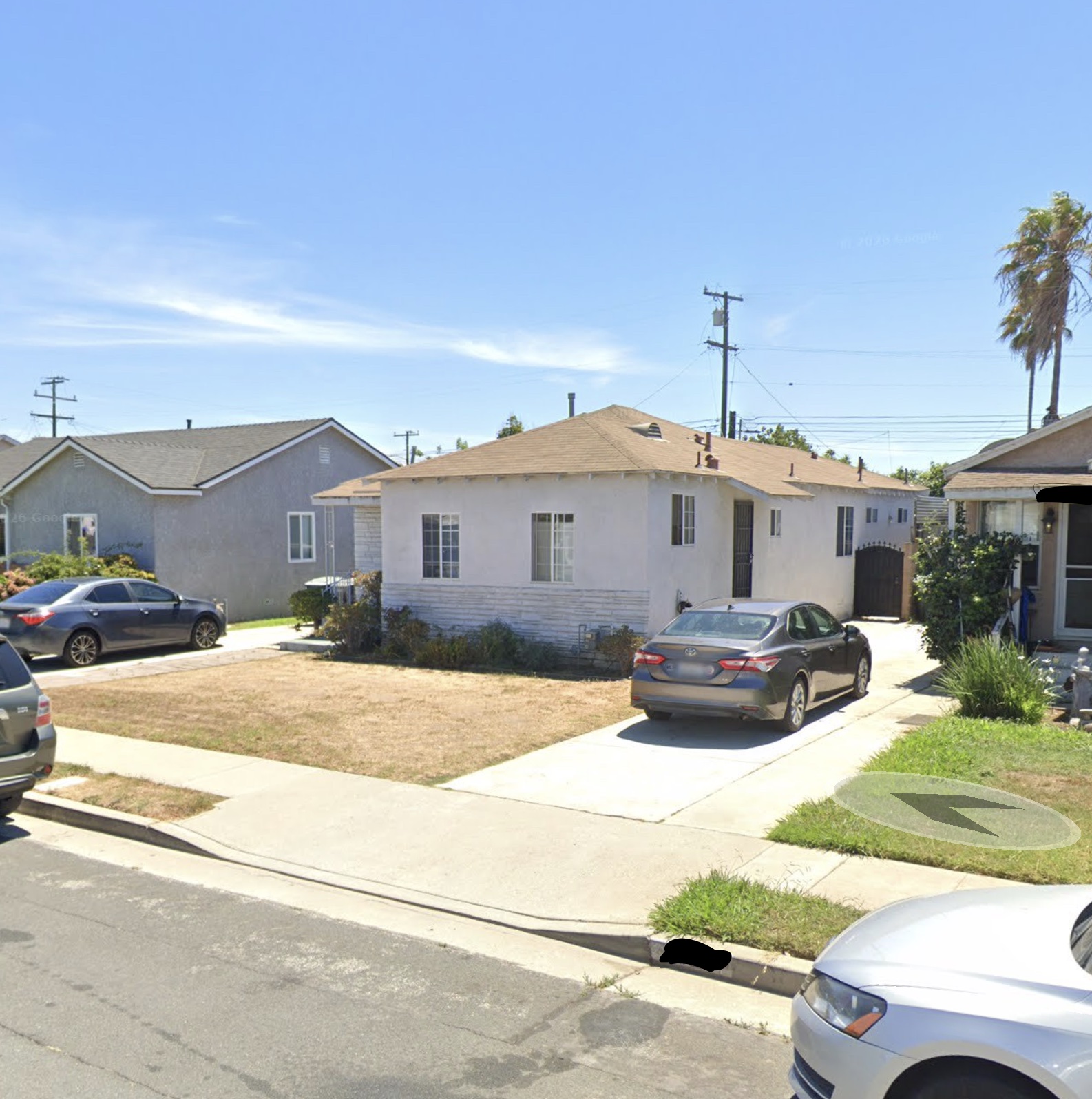
On a Narrow Gardena Lot, Which Rule Runs Out First?
Setbacks leave a 30 by 90 foot envelope on this lot, but the coverage cap allows less than that. Knowing which limit binds is the difference between a design that passes and one that gets redrawn.

What Can You Actually Build on a Narrow Lot in Pasadena?
A 41 foot wide lot sounds like a dead end. Pasadena scales the side setback to lot width and drops the coverage cap entirely below a certain size, which changes the answer.

Why Second Storeys Are Shorter on a Long Beach Lot
The ground floor keeps 10 feet from the back line and the upstairs keeps 30. On a shallow lot that single difference decides the shape of the whole house, before coverage or floor area even come up.

Can You Split a Lot That Is Already Under the Minimum?
This San Rafael lot is 8,059 square feet in a zone that asks for 10,000. It can still be split, because lot splits are measured against a different floor entirely.

When a Setback Is a Percentage, Not a Number
Inglewood writes both the side and rear yard as percentages of the lot, each with a cap. On this 44 by 137 foot lot one is decided by the percentage and the other by the cap.

How Much of a 7,405 Square Foot Lot Can You Cover in Palm Springs?
Palm Springs caps coverage at 35 percent in its one family zones. Worked through on a real lot that sits below the district minimum size, which changes less than you would think.

We Read 483 California Cities' ADU Rules. Here's Who Allows More
State law guarantees a 16-foot ADU with 4-foot setbacks in every California city. We compared the local rules of 483 cities and found 87 that allow taller ADUs, 59 that require zero parking, and 5 that allow bigger units than the state maximum.

Why Tall Buildings Get Stricter Rules at 75, 120 and 420 Feet
California's rules for tall buildings step up at specific heights — the point where fire ladders stop reaching, the point where one water riser is no longer enough, and the point where the fireproofing itself has to stick twice as hard.

The Rulebook California's Building Codes Keep Pointing To
When a code section says a product must be approved or listed, it is pointing at a separate volume most people never open — the one holding the actual tests for window bar releases, gas shutoff valves, fire doors and curb ramp pads.

Fire Alarm or Just Smoke Alarms? Where California Draws the Line
Smoke alarms and a building-wide fire alarm system are two different requirements. Here is where California draws the line for houses, apartment buildings, hotels, offices and shops — and the remodel permit that quietly triggers smoke alarms.

New Heating or Cooling in a Commercial Building? Read This First
In California, a commercial heating and cooling job is not finished when the unit runs. Someone has to test the controls and hand the city a signed certificate — and without it, the inspector will not sign off.

The Eight Policies Every San Francisco Permit Has to Satisfy
San Francisco voters wrote eight priorities into the city's planning rules in 1986, and the city still cannot approve a demolition, a conversion or a change of use without writing down that your project is consistent with all of them.

Why the Elevator Opens Into a Little Room With Doors
That small vestibule between the elevator and the hallway is a fire-safety device, not wasted floor area. California requires it — or an approved substitute — wherever elevator doors need protection, and high-rise buildings get the fewest substitutes to choose from.

Does a Finished Attic Count as Another Story?
The question that decides most California attic conversions is not whether the space is comfortable. It is whether the code counts your finished attic as an additional story — because that single classification can pull in requirements that apply to the whole house.

Your San Francisco Front Setback Is Set by Your Neighbors
In most San Francisco residential districts, how far back your house must sit is decided by the buildings next door — matched to the shorter of the two, halved when there is only one, and never more than 10 feet.

Long Beach ADUs: Limited or Conforming, and Why It Matters
Long Beach sorts backyard homes into two categories with different standards, and its published table sets some limits that state law no longer lets a city impose. Here is what applies before you draw anything.

Sacramento's 60-Foot Line Decides Your Backyard Setbacks
Where your backyard cottage sits on the lot changes its setbacks completely in Sacramento — and the city's two rulebooks differ on something most owners never ask about until it is too late: whether you can rent it by the week.

Can You Open a Corner Store in a San Francisco Home?
Those tiny groceries and cafes tucked into houses in San Francisco's residential neighborhoods are not leftovers from a looser era. The planning code allows small commercial uses in residential districts — on corner lots, only so far back from the corner, and only during set hours.

One Hour or Two? How Long a Shaft Must Resist Fire
The fire rating of an elevator, duct or trash chute enclosure turns on one question: how many floors does it connect? Four or more means two hours. Fewer means one — and basements count while mezzanines do not.
Open Space Around a Building Can Buy You Square Footage
California caps how big a building can be based on what it is made of and what it is used for — then hands some of that size back if enough open space wraps around it. Here is how the trade works and what counts as open space.

Why Your Neighbor Can Build Taller: Inside LA's Estate Zones
Los Angeles has five residential estate zones, and the number after the letters changes the rules. Two houses on the same street can face different side yards and a three-foot difference in height limit.

When Does a Building Need More Than One Exit?
California counts the people on each floor, not the whole building, to decide how many exits that floor needs. Houses get a pass; almost everything else does not.

What Does C2 Zoning Mean in Los Angeles?
C2 is the workhorse commercial zone of Los Angeles — the one behind most neighborhood shopping streets. It allows a long list of businesses without a hearing, and it quietly allows apartments too.

R1 Zoning in Los Angeles: How Close to the Line You Can Build
R1 is the one-family zone that covers most of residential Los Angeles. The rules that actually shape a remodel are the yard depths — and a wall-length rule most homeowners have never heard of.

Carlsbad ADU Rules: Your Zone Allows One, the Coast Adds a Step
Carlsbad allows a backyard unit in every zone that permits homes, and the decision is ministerial rather than discretionary. Here are the sizes, the height ladder tied to two named train stations, and what the coastal zone actually changes.
Riverside Allows a Third Kind of Backyard Home
Riverside permits movable accessory dwellings alongside the usual built-in-place and junior units — a category with its own size range, siting rules and a requirement to hide the axles. Here is how many units a lot can hold and what each type has to meet.

RM-2 Zoning in San Francisco: How Far Back You Must Build
RM-2 is the moderate-density mixed residential district, and its front setback is not a fixed number — it is copied from your neighbours. Here is how that calculation works, what has to be planted in the result, and how RM-2 differs from the districts on either side of it.

How to Write About Development Potential in a Listing
Blanket disclaimers make good listing copy useless without making bad copy safe. Here is how California agents can state a parcel's development potential with attribution, dates and one scoped verification line — plus a paste-ready remarks block.

Temecula Allows a Backyard Home in Every Residential Zone
Temecula permits accessory dwelling units in all nine residential districts, and a detached 800-square-foot unit can be approved on a building permit alone. Here are the sizes, heights, setbacks, fees and the covenant you have to record before the permit finals.

The Sign Says Keep Closed. Here's What That Door Really Does
A fire door is a tested assembly, not a heavy door. California sets what it must survive, what the letters stamped on its edge mean, and a short list of things you are never allowed to do to it — starting with propping it open.

SB 9 or an ADU? How Many Homes You Can Actually Get
These are not competing options — they stack, up to a point. The state's own guidance walks through the combinations, including the one arrangement where taking the lot split costs you every ADU you were counting on.

Which Rooms Need a Fire Sprinkler — and Which Are Exempt
When a California home has a fire sprinkler system, the default is that every area gets covered. But the code names four places that don't — small closets, small bathrooms, most attics, and the garage. The garage then has its own separate rule.

Adding a Room? California's Energy Rules Change at 700 Square Feet
Room additions in California have to meet the state's energy standards — but not the same ones a whole new house does. The requirements shift at 300, 400, 700 and 1,000 square feet, and knowing which side of those lines you are on changes the budget.

Turning a Basement Into a Bedroom? Two Rules Decide
A finished basement is not automatically a legal bedroom. In California, two things settle it: whether the ceiling is high enough, and whether someone could climb out of a window in a fire. Here is what the state code actually requires.

Corner Store Zoning: What You Can Build on an NC-1 Lot
San Francisco's smallest commercial zone is built around the three-shop corner cluster. It caps stores at one story, keeps the backyard intact at every floor, requires no parking at all — and quietly bans a long list of businesses.

RTO Zoning: Where Lot Size No Longer Sets the Unit Count
Most San Francisco residential zoning answers "how many homes?" with a lot-area formula. The transit-oriented districts threw that formula out. What decides the number instead is the shape of the building you're allowed to draw.

Do You Need a Permit to Build a Fence in California?
Contractors will tell you fences under seven feet are fine without a permit. That is half true, and the missing half is what gets people torn-out fences. Here is what the state code actually exempts, and who really sets your height limit.

What's Actually Inside the Wall You Share With Your Neighbor
The wall between two townhouses is not an ordinary interior wall. California requires it to hold fire back for one or two hours, run unbroken from the foundation to the roof, and carry almost nothing inside it — no ducts, no outlets on the far side, no plumbing.

How Far Can a Bay Window Stick Out in San Francisco?
San Francisco's rear yards and setbacks are supposed to stay open — but bay windows, balconies, eaves and fire escapes are allowed to reach into them, by exact amounts. Here are the projection limits, and the glass rule most people miss.

How High Does a Deck Railing Have to Be in California?
Your inspector red-tagged the deck railing you just built, and the number he quoted isn't the one your neighbor's deck was built to. Both can be right. California uses different heights for decks and for stairs — here's every measurement, and where the gaps between the balusters come in.

Your ADU Permit Is Approved If the City Misses 60 Days
Five months into a stalled ADU application, most owners assume waiting is the only option. California law says otherwise: miss the deadline on a complete application, and the permit is approved by operation of law. Here's every clock the city is running against.

Do New California Homes Have to Be Wired for an EV?
You buy a new house, buy an electric car, and the electrician quotes four thousand dollars to run a circuit to the garage — then finds a capped conduit already there, labeled. California has required that conduit on new homes for years. Here's exactly what builders must install.
Build Your ADU Under This Size and Pay No Impact Fees
Two ADUs, fifty square feet apart in size, can differ by tens of thousands of dollars in fees. California exempts smaller units from impact fees entirely — and the cutoff is measured in a specific way that is easy to blow past by accident.

When Does a Backyard Deck Need a Building Permit?
There is a real exemption that lets you build a deck in California without a permit — but it has four conditions, and every single one has to be true. Most backyard decks fail on the one nobody thinks about: the door.

The 500-Square-Foot Rental You Can Build Inside Your House
Your kids moved out and the back of the house is empty. California has a category for exactly that: a small independent unit carved out of the walls you already own, with no parking required and a kitchen the city can't make fancier than the law says.

How Low Can a Ceiling Be and Still Count as a Room?
The attic is finished, insulated, carpeted — and the appraiser refuses to count it as a bedroom. Ceiling height is usually the reason. California sets a different minimum for houses, apartments, converted attics and tiny homes, and the gap between them is only a few inches.

Do You Need a Permit to Build a Retaining Wall?
The landscaper says anything under four feet is free and clear. He's quoting a real rule — he's just measuring it from the wrong place, and skipping the word that most often cancels the exemption. Here's how California actually counts a retaining wall's height.

How Much Backyard Does San Francisco Make You Leave?
A San Francisco rear yard isn't a fixed setback — it's a percentage of your lot's depth, and on a deep lot it can swallow a third of the property. Here's how the number is calculated, which floors it applies to, and the exceptions for corner lots.

Smoke Alarm Screaming Every Time You Cook? Here's Why
If searing a steak sets off the hallway alarm, the alarm is probably in the wrong place. California's code sets minimum distances from the stove, the bathroom door, the heating vents and the ceiling fan — and a separate set of locations for carbon monoxide alarms.

Can You Sell Your ADU Separately from the House?
You built the backyard unit, and now you'd rather sell it than rent it. California opened a door to that in 2024 — but only if your city walked through it first, and only after your mortgage lender signs off in writing.

Does Your ADU Really Need a Parking Space?
The planner tells you the ADU needs a parking space, and the garage you were going to convert has to be replaced somewhere else on the lot. Both statements may be wrong. California law caps what a city can ask for — and lists six situations where it can ask for nothing at all.

Does California Actually Require a Fence Around Your Pool?
Everyone tells you a pool needs a fence. California's law is stranger than that: it asks you to pick two safety features off a list of seven, and a fence is only one of them. Here's the list, and the exact specs a fence has to hit if you choose it.

Is Your Water Heater Strapped the Way California Requires?
Two straps around the tank looks like a finished job — until an inspector points out that both of them are in the wrong third of the heater. California is specific about where the straps go, and the rule applies to the heater you already own, not just new ones.

AB 2011 Turns Strip Malls Into Housing, Without a Hearing
AB 2011 turned commercial corridors into housing sites. A qualifying project is a use by right, reviewed against checklists instead of a hearing, at densities the statute sets — and the city has 60 or 90 days to give an answer.

In Fire Country, a Second Rulebook Applies to Your Home
California moved its wildfire-area construction rules into a standalone code. If your property sits in one of those areas, it governs things most homeowners never think of — the width of your driveway, the number on your gate, the water your fire district can draw.

SB 9, Explained: What It Actually Lets You Build
SB 9 lets many California homeowners add a second home, or split the lot in two, without a hearing. The limits are specific — minimum lot sizes, a protected unit size, a ceiling on setbacks and parking, and a hard cap on total units.

The Green Building Rules Your City Can Switch On
California's green building code has two halves: measures every project must meet, and a menu of stricter ones that bind you only if your city adopts them. Knowing which half you are reading changes what your project costs.

How Much Insulation California Actually Makes You Buy
Ceilings, walls, floors — even the hatch into your attic. California sets a hard floor on how much insulation goes into a new home, and a slightly easier one when you are remodeling an old one.

Replacing the Furnace? Expect the City to Want a Look
Heating and cooling work sits in its own corner of California's rulebook — and that book quietly publishes a list of every job jurisdictions charge a permit for, from a furnace swap to a single bathroom exhaust fan.
Why Your Sprinklers Can't Just Tap the Water Line
Irrigation water sits in pipes with fertilizer, soil and standing water. California's plumbing rules exist mostly to keep that water from ever travelling backwards into the tap you drink from — and they get specific about how.

Unlocking the Potential of ADU/JADU Construction in Los Angeles, California
Explore the regulations and opportunities for building ADUs and JADUs in Los Angeles, CA, to maximize property value and space.

Does Your Building Need Fire Sprinklers? California's Triggers
You found the perfect space for your restaurant — then the plan reviewer said two words that change the budget: "sprinklers required." California decides by numbers: how big the space is, how many people it holds, and what floor it sits on.

How Big Can an ADU Be in California? State vs City Limits
You sketched a 1,000-square-foot backyard cottage and the city said their cap is smaller. Who wins? California's ADU law sets hard ceilings on what cities may restrict — and a guaranteed unit every city must approve.

Which Rooms Need an Escape Window? California's Bedroom Rule
You finished the basement, put a bed in it, and the appraiser won't call it a bedroom. The sticking point is usually one thing: every sleeping room in California needs its own emergency escape opening — a window or door big enough to get out of, and to be rescued through.
Do You Need a Permit for a Shed in California?
The shed kit is in the driveway and a neighbor just asked if you pulled a permit. Good news: California exempts small one-story sheds from building permits — the line is 120 square feet. The catch is what the exemption doesn't cover.
How Close to the Property Line Can You Build in California?
Your contractor says five feet, a neighbor swears he built right on the line, and the internet says thirty. All three can be right — three different rulebooks stack on the same lot line, and the strictest one wins.

What Does RH-1 Zoning Mean in San Francisco?
Your parcel report says RH-1 and the listing calls it "prime single-family zoning." Here's what that actually allows: one house on a narrow lot, a 35-foot height ceiling that moves with the hill, setbacks copied from your neighbors — and more flexibility than the label suggests.
How California's 2025 Building Codes Work — Who Writes Them, Who Can Change Them
Halfway through planning your project, someone says "that changed in the new code." Which code? California's building rulebook is actually thirteen books, rewritten every three years — and your city is allowed to make them stricter, but never looser.

How Close to the Fence Can You Build? California's Fire Rules
Your neighbor's wall sits right on the property line, but your contractor says yours needs special fire-rated construction? Both can be right. California sets different rules at 2, 3, and 5 feet from the line — here's what changes at each step.
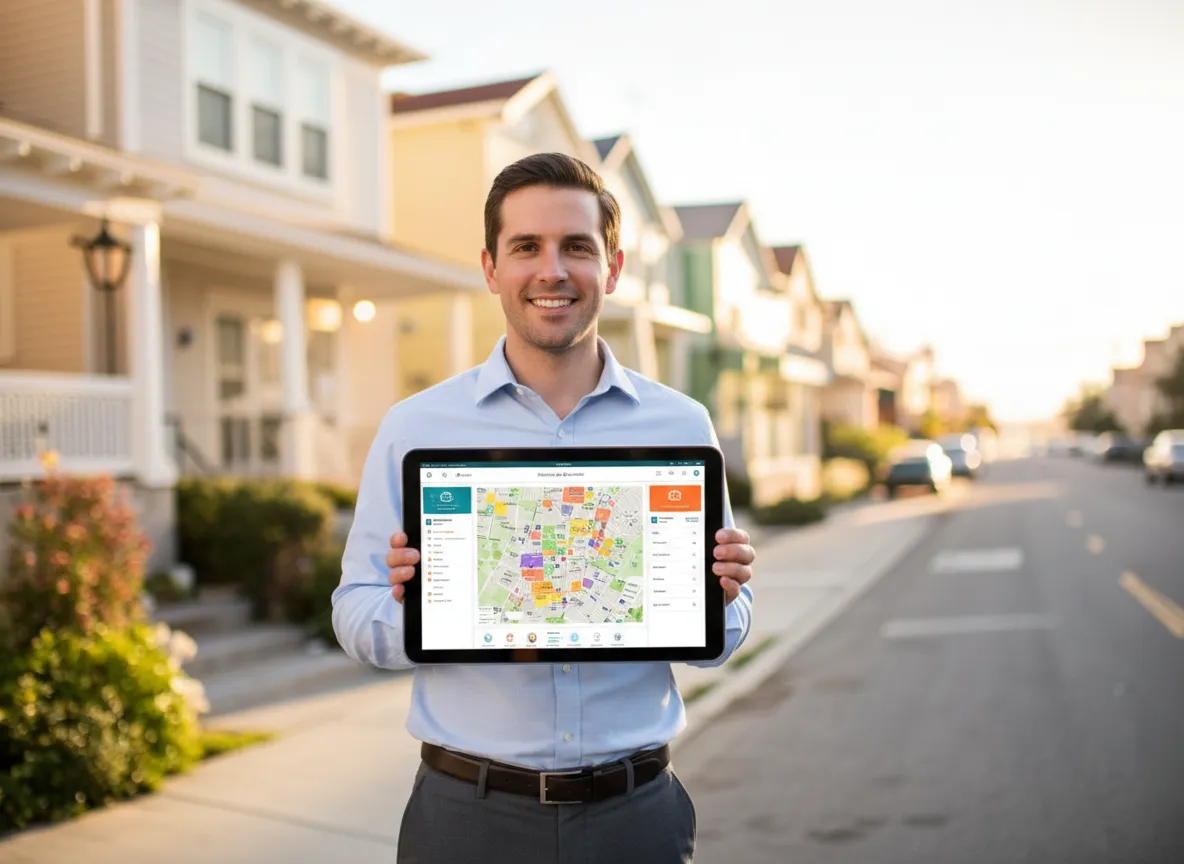
How Emily Used AI to Unlock ADU Potential at Her Cupertino Home
Discover how Emily leveraged GoCodebook AI to explore ADU and JADU possibilities for her Cupertino property.
From Church to Housing? Inside the $4.7M Sale of a SF Landmark
A historic San Francisco church at 2151 Van Ness Ave has sold for $4.7 million. We explore whether the site can be redeveloped into residential housing, including zoning constraints and preservation challenges.
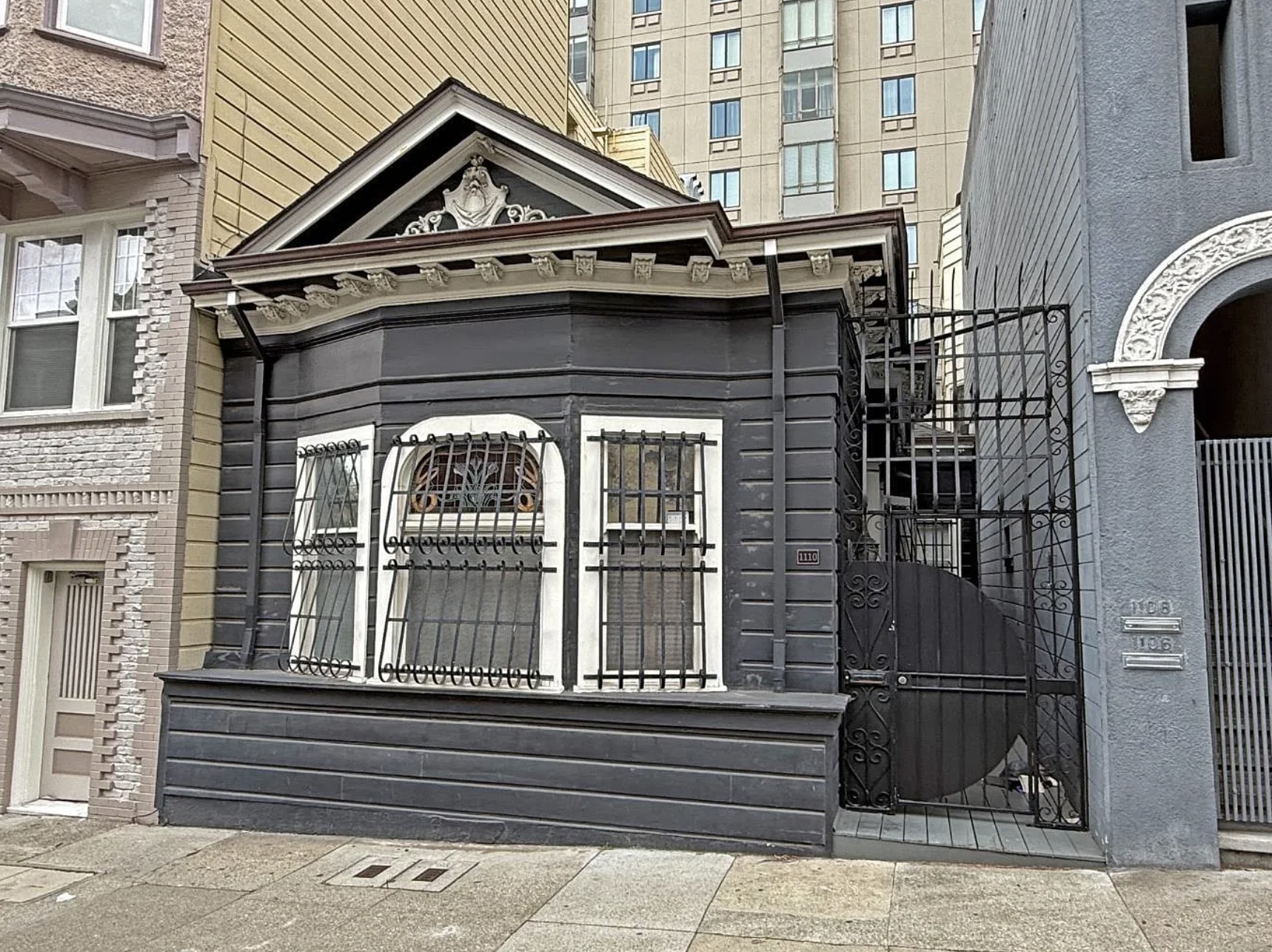
Ground-Up Construction Feasibility at 1110 Taylor St, San Francisco, CA
Ground-up construction at 1110 Taylor St faces historic and zoning challenges. A property is recently listed at 1.7M USD on Zillow and Redfin. This advisory report investigate the historic and zoning challenges in San Francisco.
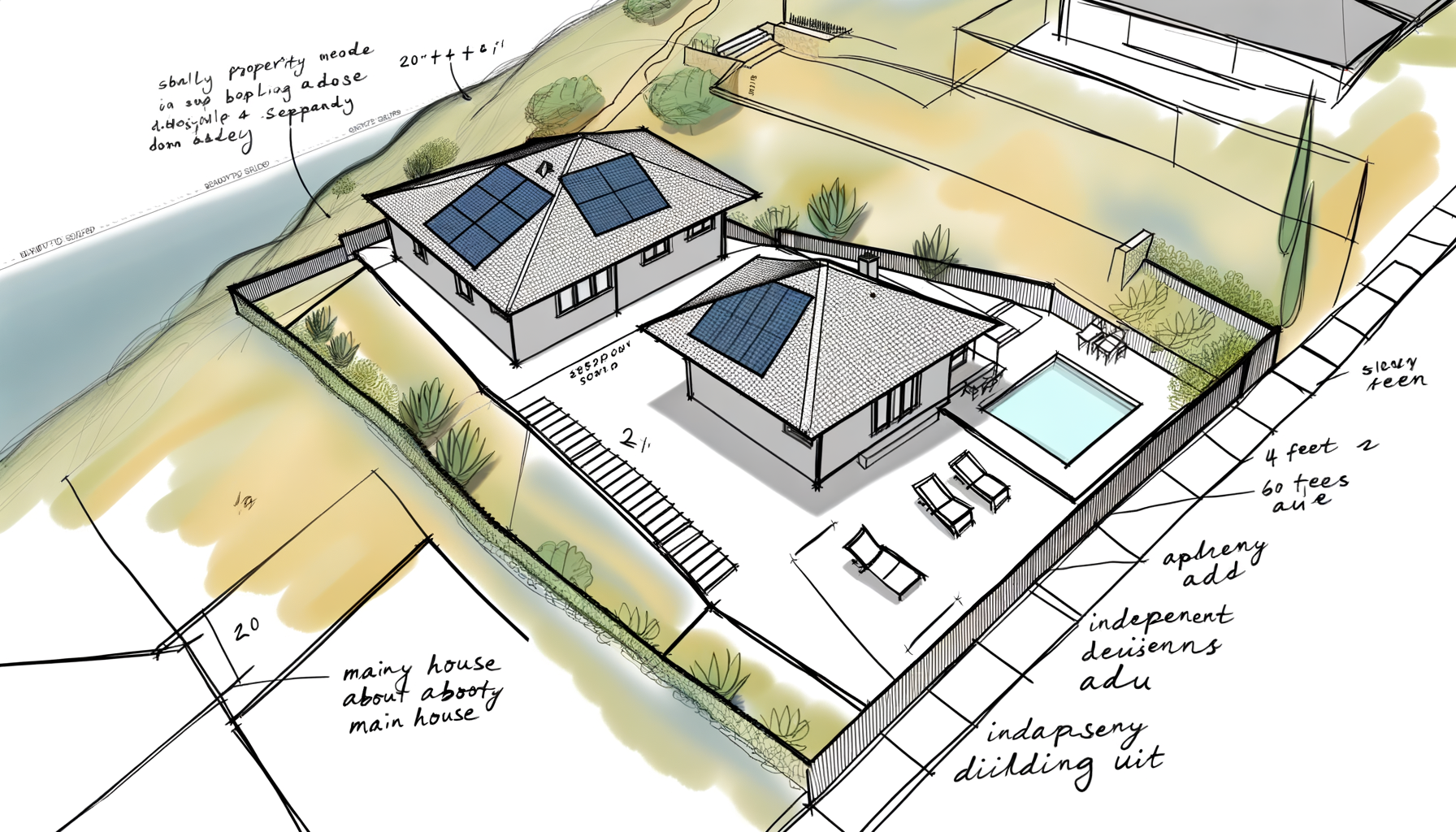
Building an ADU on a Los Angeles Hillside? Check the Fire Map First
Los Angeles bars an accessory dwelling unit on a lot that sits in both a hillside area and a very high fire hazard severity zone — unless it qualifies for one of two exceptions. Here is what the city's own ordinance requires, what it caps a detached unit at, and the trade you make by taking the conditions route.

California Rent Control: How Much Can Your Rent Go Up?
State law caps most rent increases at 5 percent plus inflation, or 10 percent, whichever is lower — and that word "lower" is the part almost everyone gets backwards. Here is who the cap covers, who is exempt, and how local city rules fit on top.

NFPA Sprinkler Cheatsheet (2025 Edition)
NFPA 13 vs. NFPA 13R vs. NFPA 13D, Based on the MeyerFire 2025 Update
This is your fast, field-ready breakdown of the differences between NFPA 13, NFPA 13R, and NFPA 13D—pulled directly from the MeyerFire 2025 summary sheets. Use this as a design-phase quick guide or a permit-set reference when selecting the correct sprinkler standard.

Handrail Requirements & Graspability Rules for California Homes (2025 CRC/CBC)
Handrails look simple on drawings—but inspectors check them with a microscope. A handrail that’s too fat, too close to the wall, not continuous, or with a non-compliant return will trigger corrections every time.
Here’s a clean breakdown of the 2025 California Residential Code (CRC) and California Building Code (CBC) requirements for single- and two-family dwellings (R-3 Occupancy, Type VB).

Electrical Outlet Requirements & Spacing Rules for California Homes (2025 CRC + CEC)
Electrical outlet placement is one of the most common plan-check comment triggers in California residential projects. Here’s a clear, room-by-room breakdown of required outlet spacing, height, and protection for single- and two-family dwellings (R-3 Occupancy) under the 2025 California Residential Code (CRC) and California Electrical Code (CEC).

Stair Requirements for Single-Family Homes in California (2025 CRC & CBC)
Stair design looks simple—until your permit reviewer starts asking about width, landings, risers, slope, and fire protection. Here’s a concise breakdown of what the 2025 California Residential Code (CRC) and California Building Code (CBC) require for single- and two-family dwellings (R-3, Type VB).

Three Fire Sprinkler Rulebooks — Which One Covers Your Building?
California does not write its own fire sprinkler rules. It adopts three separate standards and assigns one to your project by building type — houses, low-rise residential, or everything else — then prints its own amendments on top. Here is which one applies to you, and what the state changed.

2025 California Building Code — Key Changes Every Architect and Engineer Should Know
The 2025 California Building Code (CBC) brings some of the most sweeping technical and organizational updates in a decade. Based on the 2024 International Building Code, this new edition modernizes California’s approach to mass timber, seismic safety, fire protection, wildfire resilience, and building coordination across the state’s evolving regulatory framework.
Here’s what you need to know before the new code takes effect on January 1, 2026.

2025 California Title 24 Code Updates — What Architects, Builders, and Designers Need to Know
2025 California Title 24 Code Updates — What Architects, Builders, and Designers Need to Know
California’s 2025 Title 24 Building Standards introduce one of the most comprehensive code overhauls in recent memory. Effective January 1, 2026, the updates reshape the rules for building safety, electrification, energy efficiency, and sustainability across all project types—from single-family dwellings to high-rise towers.
Below is a summary of the key changes by code Part, highlighting what matters most for architectural design, engineering coordination, and construction planning.

Egress and Emergency Escape Requirements for Single- and Two-Family Homes in California
Egress and Emergency Escape Requirements for Single- and Two-Family Homes in California
Safe exit paths are among the most fundamental parts of residential design. For single- and two-family dwellings (R-3 Occupancy), the California Residential Code (CRC) outlines how occupants must be able to exit quickly and safely during an emergency.
Here’s a concise guide to the 2025 CRC requirements you need to know for new construction, ADUs, and remodels.

Gas & Electric Meter Separation: Where to Measure the 3-Foot Rule
If you’ve ever had a gas and electric meter land too close together on your plans, you’ve probably heard the “3-foot rule”—but where exactly do you measure that distance?

Outdoor Fireplace Height Limits in a Rear Yard Setback
If you plan to add an outdoor fireplace or similar built-in feature within the required rear yard setback of a residential property in San Francisco, your design falls under the City’s “permitted obstruction” rules in Planning Code §136(c). (Single-Family Homes, R-3, Type VB)

Wall Assembly Requirements Between an ADU and a Garage in California
When an Accessory Dwelling Unit (ADU) shares a wall or ceiling with a garage, that separation must provide adequate fire protection between the habitable space and the area used for vehicle storage. The rules come from the 2025 California Residential Code (CRC) and the 2025 California Building Code (CBC), which apply to all R-3 Occupancy, Type VB residential construction.

How Far Can a Deck Project into a Setback in San Francisco?
Designing a new deck in San Francisco often runs straight into one big question: “How far can my deck project into the required setback or rear yard?”

Handrail Graspability Rules in California
When a stair feels awkward or unsafe, it’s almost always because of the handrail design—and the code agrees. In R-3 single- and two-family homes, type VD, the California Building Code (CBC §1014.4) and Residential Code R320.6 spell out what makes a handrail “graspable.”

Tesla Powerwall “Firewall” Requirements in CA Homes — What Actually Applies
If you’re placing a Tesla Powerwall (ESS) at a single-family or duplex (Group R-3, Type VB) in California, here’s the clear, code-driven picture—especially for tight sites near the property line.

Penthouse Additions on Roof Decks — San Francisco Single-Family Homes
Adding anything above the main roofline in San Francisco is one of the most highly regulated parts of residential design. For single-family homes, both the San Francisco Planning Code and the California Building Code (CBC) restrict what can be considered a “penthouse” and what can legally rise above the height limit. (R-3, Type VB)

Can You Park on a Turntable? Rules for Two-Car Garages in San Francisco
For your R-3, four-story, Type VB project at 825 Francisco Street, the local limit of two cars per private residential garage comes from San Francisco Planning Code parking controls, not from the Building Code. The Building Code governs safety and construction, while the Planning Code governs how many vehicles you’re allowed to accommodate.

Wall-Mounted (Sidewall) Sprinklers — Required Distances
For a four-story R-3, Type VB building in California protected by an NFPA 13R sprinkler system, wall-mounted (sidewall) sprinklers must meet the NFPA 13R standard and the UL listing of the specific sprinkler head. Unlike special-hazard or geometry-based occupancies, the location type—such as a staircase—does not change these distance rules. The required clearances and spacing remain the same throughout the building.

Rooftop Screens for Mechanical Units: What You Can Build—and How Tall
Got condensers or an ERV you’d rather not show? In San Francisco, R-3 houses (single/two-family, including 3–4 stories, Type VB) can absolutely hide rooftop equipment—**but the screen has to meet both Planning and Building Code rules.

Smoke Alarm Rules for California Homes: Where They Go and How They're Wired
How far a smoke alarm has to sit from the stove, the bathroom door and the ceiling fan, when they must be interconnected so one sets off all of them, and which remodels drag the rest of the house up to the current standard.

Tesla Powerwall at the Property Line? What California Actually Requires
If you’re planning a Tesla Powerwall on a 3-story + basement, R-3 house (Type VB) with sprinklers, the single most common question is: “Can I set it right on the lot line?” Short answer: Not by default. But there are clear, code-backed paths to make tight sites work.
San Francisco Runs Two ADU Programs. Which One Is Yours?
San Francisco has a local backyard-home program and a state-mandated one, and the code decides which you get. One is faster with a size ceiling; the other has no unit cap on larger buildings but adds tenant-protection review.

How to divide a living room into another room
To divide a living room into another room in a single-family or two-family house in San Francisco or California generally, you must comply with local planning regulations as well as California Building Code and Residential Code requirements. Here are the essential steps and code requirements

Guardrails guidelines in California houses
For single- and two-family dwellings in California, guardrails (guards) are required at open-sided walking surfaces, including stairs, ramps, and landings, that are more than 30 inches above the floor or grade below. The main requirements are:

Installing swimming pool in single or two family houses in California
For swimming pools in single- and two-family dwellings in California, the requirements are followed below.

Elevator requirement for single or two-family houses in California
For single- and two-family dwellings in California, elevators are not required by code, but where installed, there are specific compliance requirements.

Minimum size of a room of ADU in San Francisco
The Planning Code sets no minimum size for a room inside an ADU — and the building code does. Section 207.2(e) stops the City imposing one; California Residential Code R312.1 still requires a habitable room to be at least 70 square feet.
Working from Home: How to Legally Build a Home Office
To install a home office in a single- or two-family dwelling in California, you must comply with both statewide (California Residential Code) and local (such as San Francisco Planning Code) rules. The California Residential Code does not prohibit a home office, but any work must retain the residential character of the space.

Living Small in a Big City: The Minimum Room Size in San Francisco
In a city where every square foot can cost a fortune, how small can your living space legally be? We will discuss about the minimum requirement for a room in San Francisco.

Max FAR in San Francisco
Table 124's Floor Area Ratio limits do not apply to homes — but since 12 January 2026, Section 207.10 caps an individual dwelling unit at 4,000 square feet or a 1.2:1 ratio, whichever is greater. For a new build, that is your FAR.

The maximum Floor Area Ratio (FAR) in the Residential R3 District
San Francisco has no district called R3 — it has RH-3, RM-3 and RC-3, and their basic limits differ. Table 124's figure does not reach a dwelling, but since January 2026 Section 207.10 caps one at 4,000 square feet or 1.2:1.
Who Makes the Zoning Rules for Your California Property?
Your contractor points at the fence line and says the addition has to sit back "about five feet, maybe ten, depends on the city." You go home, search for California's zoning rules, and find a wall of statutes that never once mentions a setback. An hour later you still do not know how far back your wall has to go.
That is not a research failure. California has no statewide zoning code that sets the rules for your lot. The state framework, the Planning and Zoning Law, exists to let cities and counties write their own zoning — and it says so in its own opening section, § 65800. Your real rules are local.
Can Your Garage Become a Living Room? Start With the Ceiling
The contractor tapes out the new wall, looks up, and gets quiet. The garage slab sits a step below the house, the ceiling joists are low, and there is a duct running across the middle of the span. Then the plan checker's letter arrives asking about smoke alarms in three bedrooms you were not touching.
Two things decide most garage conversions before anything else. The ceiling has to clear 7 feet over habitable space (§ R313.1), and the room needs glazed openings equal to 8 percent of its floor area for light and 4 percent openable for air (§ R325.1) — the two things a garage, built as a garage, almost never has.
Key numbers
| What is measured | The number | Where it comes from |
|---|---|---|
| Ceiling over habitable space | 7 feet | § R313.1 |
| Ceiling over a bathroom, toilet or laundry room | 6 feet 8 inches | § R313.1 |
| Sloped ceiling | 50 percent of required floor area at 7 ft, none below 5 ft | § R313.1 |
| Natural light | Glazed area ≥ 8 percent of floor area | § R325.1.1 |
| Natural ventilation | Openable area ≥ 4 percent of floor area | § R325.1.2 |
| Artificial light instead | Average 6 footcandles at 30 in above the floor | § R325.1.1, exc. 3 |
| Mechanical ventilation instead | 0.35 air changes per hour | § R325.1.2, exc. 1 |
Planning an ADU in Santa Barbara? Pick the Right Rulebook
You price out a backyard unit, your designer sketches something around 1,000 square feet, and then someone at the permit counter asks whether the lot sits within a thousand yards of the beach. Now there is a second permit in the conversation and a second set of standards. In Santa Barbara that question comes up constantly, and it is not the only fork in the road.
Santa Barbara caps a detached accessory dwelling unit at 850 square feet for a studio or one-bedroom and 1,000 square feet with two or more bedrooms on lots under 15,000 square feet, rising to 1,200 square feet on larger lots, with a four-foot interior setback for new construction (§ 28.86.055). If your lot is in the coastal overlay, a coastal development permit comes with it (§ 28.44.110).
Flame Spread Index: The Fire Number on Your Insulation Label
The insulation installer hands you a spec sheet with two numbers circled — something like "25 / 50" — and says the inspector will want to see it. Nobody explains what the numbers are, or what happens if the product you actually liked has higher ones. They are fire-test results, and California sets a different ceiling for almost every material in your house.
Wall and ceiling finishes in a California home have to test at a flame spread index of 200 or less and a smoke-developed index of 450 or less (§ R302.9). Insulation is held to a far tighter 25 and 450 (§ R302.10). Both come from the same tunnel test.
Key numbers
| Material | Flame spread index | Smoke-developed index | Where it comes from |
|---|---|---|---|
| Wall and ceiling finishes | 200 or less | 450 or less | § R302.9 |
| Insulation in walls, floors, roofs, attics and crawl spaces | 25 or less | 450 or less | § R302.10 |
| Foam plastic insulation (building code) | 75 or less | 450 or less | § 2603.3 |
| Metal composite material cladding | 75 or less | 450 or less | § 1406.9 |
| Exposed insulation on an attic floor | Measured differently — critical radiant flux of at least 0.12 watt per square centimeter | — | § R302.10 |
Los Angeles Has 60 Days to Answer Your ADU Permit
Your drawings are finished, your contractor is ready, and the only thing left is the city. A neighbour says their permit took most of a year. Someone at the counter mentions a hearing. For a backyard unit in Los Angeles, neither of those should be true — and the law is unusually specific about why.
An accessory dwelling unit (ADU) permit in Los Angeles is decided by staff, without a hearing and without discretionary approval (§ 12.22 A.33(c)(2)). The city has 15 business days to tell you in writing whether your application is complete, and 60 days from a complete application to approve or deny it (§ 66317). If it misses the 60 days, your permit is deemed approved.
Two Buildings on One Lot: Where the Imaginary Line Goes
On a San Francisco lot with two buildings, fire separation distance is not read off the survey. California Building Code Section 202 gives three things it may be measured to; on one lot only one is available — a line between the two buildings that Section 705.3 supplies and the drawing places. San Francisco's published Planning Code Interpretations set a floor on the whole gap and say nothing about where that line goes. Section 705.9.6 states its condition on the distances from the line to each building, and carries none of the Group R-3 relief that ends the search earlier.
Key numbers
| Figure | What it governs | Section |
|---|---|---|
| 5 feet | Opening area no longer limited (Group R-3); wall rating removed (Group R-3, Type II-B or V-B) | Table 705.9 footnote f; Table 705.5 footnote i |
| 3/4 hour | Rating of the opening protectives | Section 705.9.6 |
| 15 feet | Height above the adjacent roof; distance to each building | Section 705.9.6 |
| 25 feet | Horizontal dimension of the open court | Interpretations, Code Section 140(a)(2) |
Can You Keep Original Glass in a Historic Building?
The sidelight beside your 1890s front door has the wavy, slightly rippled glass that only comes from a period process. A pane cracks. Your contractor says it has to come out and be replaced with tempered safety glass, because it is next to a door — and just like that, the last original glazing in the entrance is going in a skip.
For a qualified historical building, that is not the only option. California's historical building code allows historical glazing in areas subject to human impact to stay, subject to the concurrence of the enforcing agency, where alternative protective measures are provided — additional glazing panels, protective film, protective guards or systems, or devices and signs that deliver adequate public safety (§ 8-812.1).
The default rule, and why it removes old glass
Start with what applies to an ordinary building, because it explains the contractor's advice.
Remodeling a Business? When Accessibility Upgrades Kick In
You are replacing the counter and the flooring in your shop. The plans go in, and the plan checker comes back asking about the restroom at the back, the front entrance, and the parking stall out front — none of which you were touching. It reads like the city is holding your counter hostage over the whole building.
It is not arbitrary. In California, altering part of a building triggers a duty to provide an accessible path of travel to the area you altered — and that path expressly includes the primary entrance, the toilet and bathing facilities serving the area, drinking fountains, public telephones and signs (§ 11B-202.4). The cost of that path work is capped at 20 percent of the adjusted construction cost of your project (§ 11B-202.4, exception 8).
Do Your Upstairs Windows Need Fall Protection in California?
The window quote comes back with a line item you did not expect: "window opening control devices, 4 ea." You ask what they are, and the installer says the inspector will not sign off without them on the upstairs bedrooms. Nothing about the windows is changing except the windows themselves — so why does a replacement job suddenly involve hardware you have never heard of?
Because California treats a low window on an upper floor as a fall hazard. In a home, the rule bites when the bottom of the window's clear opening sits less than 24 inches above the floor inside and more than 72 inches above the ground outside. When both are true, the window must either not let a 4-inch sphere pass at its widest opening, or carry a fall-prevention device meeting ASTM F2090 (§ R321.2).
Key numbers
| What the code measures | The number | Where it comes from |
|---|---|---|
| Sill height inside that triggers the rule, new work | Less than 24 inches above the finished floor | § R321.2.1 |
| Drop to the ground outside | More than 72 inches below the opening | § R321.2.1 |
| Opening size that counts as a hazard | A 4-inch-diameter sphere passes at the largest open position | § R321.2.1 |
| Device standard | ASTM F2090 | § R321.2.1 |
| Replacement windows, one- and two-family homes | Sill less than 24 inches above the floor | § 702.4 |
| Replacement windows, apartments and condos | Sill less than 36 inches above the floor | § 702.4 |
| Very tall openings | Above 75 feet, devices meeting ASTM F2006 | § 702.4 |
Does Your Project Qualify for SB 35 and SB 423 Streamlining?
You own a corner lot on a commercial street, zoned for housing, and the last three projects in town spent two years in hearings before anyone poured concrete. Someone at the counter mentions there is a path where the city has to approve your project without a public hearing — no conditional use permit, no discretionary review. It sounds too good to be true, and it comes with a long list of conditions.
That path is the streamlined ministerial approval process created by SB 35 and extended by SB 423. It applies to a multifamily development of two or more units that meets every one of the statute's objective planning standards, and it removes the conditional use permit and other nonlegislative discretionary approvals from the process (§ 65913.4). "Ministerial" means the city checks your project against a checklist rather than deciding whether it likes it.
Where Your Building Needs Fire Extinguishers in California
The fire inspector walks your new cafe, looks at the wall by the kitchen door, and writes you up. You have an extinguisher — you bought a good one — but it is on the wrong wall, too far from the range, and the wrong class for a kitchen fire. None of that was obvious when you hung it.
California decides this in two steps. One section says where extinguishers are required: in most commercial occupancy groups, within 30 feet of travel from commercial cooking equipment, in areas where flammable liquids are handled, and on each floor of a building under construction (§ 906.1). A second says what size and how they are spread out, working from the hazard level of each area (§ 906.3).
Key numbers
| The requirement | The number | Where it comes from |
|---|---|---|
| Distance from commercial cooking equipment | Within 30 feet of travel distance | § 906.1 |
| Apartment buildings, per-unit option | Each dwelling unit rated at least 1-A:10-B:C | § 906.1 |
| Family day-care homes, large and small | At least 2A:10B:C | § 906.1 |
| Buildings under construction | On each floor, except detached homes | § 906.1 |
| Building protection | Extinguishers suitable for Class A fires | § 906.3 |
| Visibility | Must not be obstructed or obscured from view | § 906.3 |
Who Writes California's Building Codes, and How to Weigh In
Every three years the rules change. Your contractor mentions the new edition, the inspector starts asking about something that was fine on your last project, and somewhere a requirement you have never heard of became mandatory. It can feel like the code arrives from nowhere.
It does not. California adopts building standards on a published schedule, through a rulemaking process with a formal comment period that anyone can participate in. The process exists to guarantee three things: public participation, technical review by advisory committees, and notice to the public before the Building Standards Commission adopts anything (§ 1-401).
Key numbers
| The step | The requirement | Where it comes from |
|---|---|---|
| Advance notice to agencies | At least 180 days before the submittal deadline | § 1-406 |
| Requesting a public hearing | Written request at least 15 days before the comment period closes | § 1-413 |
| Justifying a comment | Must cite the Nine-Point Criteria in state law | § 1-413 |
| Adoption cycles | Triennial and Intervening | § 1-406 |
Can Your City Require More Than the State Energy Code?
You pull a permit for a new house in one city and the plans sail through. The same design across the city line comes back asking for a heat pump water heater and more solar than the state requires. Nobody moved the state energy code — one of those cities adopted its own, stricter version.
Cities are allowed to do that, and the process has real gates. A local government may adopt and enforce its own energy standards for new buildings, additions, alterations and repairs — but only after it adopts a cost-effectiveness determination at a public meeting, files it with the Energy Commission, and the Commission finds the standards will make buildings consume less energy than the state code permits (§ 10-106).
Key requirements
| The gate | What it takes | Where it comes from |
|---|---|---|
| Cost effectiveness | Determination adopted at a public meeting, then filed with the Energy Commission | § 10-106(a) |
| Energy performance | Commission finds buildings will use less energy than the state code permits | § 10-106(a) |
| Application | Proposed standards, findings, analyses and environmental documents | § 10-106(b) |
| Second approval | Ordinance filed and accepted by the Building Standards Commission | § A4.201.1 |
| Timing | Both approvals come before enforcement | § 10-106(a), § A4.201.1 |
Yuba City Will Let You Build an ADU — But Not a Home Office
You have been sketching something for the back of the lot — a rental most of the year, a quiet office two days a week, maybe a flat roof you could sit on in the summer. Yuba City's ordinance answers all three of those before it ever gets to square footage, and two of the answers are no.
The size rules are generous. Yuba City allows one accessory dwelling unit plus one junior unit on a lot with a single-family home; detached can run to 1,200 square feet and 16 feet tall with 4-foot side and rear setbacks, and the junior unit gets 500 square feet inside the walls of the house (§ 8-5.5004). It is the conditions attached to those numbers that catch people out.
Key numbers
| What | Yuba City standard | Where it is written |
|---|---|---|
| Units on a single-family lot | 1 accessory unit + 1 junior unit | § 8-5.5004(c) |
| Detached unit, maximum size | 1,200 sq ft | Table 8-5.5004(A) |
| Attached unit, maximum size | 50% of the house's floor area, up to 1,200 sq ft | Table 8-5.5004(A) |
| Junior unit, maximum size | 500 sq ft | Table 8-5.5004(B) |
| Side and rear setback | 4 feet | Table 8-5.5004(A) |
| Detached height | 16 ft, or 18 ft within a half-mile of major transit | Table 8-5.5004(A) |
| Attached height | 25 ft, or the house's limit if lower | Table 8-5.5004(A) |
| Roof decks | Not permitted | Table 8-5.5004(A) |
| Impact fees | None below 750 sq ft | § 8-5.5004(c)(9) |
| Shortest rental term | 30 days | § 8-5.5004(c)(5) |
Building an ADU in Concord? Here Are the Three Numbers That Decide
A neighbour finishes a small cottage at the back of their lot and suddenly everyone on the street is doing the arithmetic. Could the same thing fit behind your house? In Concord the answer usually turns on three numbers — how big, how far from the fence, and whether you have to give up a parking space — and the city has written all three down.
Concord allows a second unit up to 1,000 square feet on most lots, or 1,200 square feet on lots of 12,000 square feet or more, with four-foot side and rear setbacks and a detached height limit of 16 feet (§ 18.200.180). A complete building permit application is processed ministerially within 60 days — no hearing, no discretion.
Key numbers
| What | Concord's rule | Where it comes from |
|---|---|---|
| Minimum size | 150 sq ft of living area | § 18.200.180 |
| Maximum size, lot under 12,000 sq ft | 1,000 sq ft | § 18.200.180 |
| Maximum size, lot 12,000 sq ft or more | 1,200 sq ft | § 18.200.180 |
| Extra cap | No more than half the floor area of the main house | § 18.200.180 |
| Floor never capped below | 800 sq ft | § 18.200.180 |
| Junior unit, maximum size | 500 sq ft, inside the walls of the house | § 18.200.180 |
| Side and rear setbacks | At least 4 ft | § 18.200.180 |
| Front and corner-side setbacks | Same as the main house | § 18.200.180 |
| Height, detached | 16 ft, or 18 ft near frequent transit | § 18.200.180 |
| Height, attached | 25 ft or the house's limit, whichever is lower; 2 storeys maximum | § 18.200.180 |
| Parking | 1 space, with several exemptions | § 18.200.180 |
| Permit decision | Ministerial, within 60 days of a complete application | § 18.200.180 |
Can You Put a Billboard on Your Property in Baldwin Park?
A rep from an outdoor-advertising company knocks on the door of your warehouse near the freeway. They offer you monthly rent for the back corner of your lot — all they need, they say, is your signature and a permit. Before you sign anything, it is worth knowing that Baldwin Park bans billboards on almost every property in the city, and the narrow strip where a new one is allowed comes with a long list of conditions.
Baldwin Park prohibits off-site signs — billboards — citywide (§ 153.170.050). New ones are allowed only within 200 feet of an interstate freeway right-of-way, on commercially or industrially zoned land, with a face no larger than 48 feet by 14 feet (672 square feet) on a structure no taller than 65 feet (§ 153.170.110). Every one needs a signed agreement with the city.
How Many People Are Allowed in a Room in California?
You book a small hall for a family party and a laminated card by the door says the room holds a maximum of 74 people. Not 70, not 75 — 74. Or you are fitting out a studio and the plan checker asks you for the occupant load before she will look at anything else. Either way the same question comes up: where does that number actually come from, and who decides it?
California does not set a flat headcount. A room's capacity is worked out from its floor area, divided by a factor set for how the room is used — 200 square feet per person for residential space, 60 for a store, 20 for a classroom (Table 1004.5). Whatever the use, the count may never exceed one person per 7 square feet (§ 1004.5.1).
Key numbers
Each figure below is the floor area the code allows per person. A bigger number means fewer people in the same room.
Calabasas Caps How Much of Your Back Yard an ADU Can Cover
Your neighbor built a backyard cottage last spring, so you measure your own yard, sketch a 900-square-foot unit behind the pool, and take it to a designer. She asks one question you did not expect: how much of the rear yard is already covered? In Calabasas that number decides the project before setbacks or height ever come up.
Calabasas allows one accessory dwelling unit (ADU) — a self-contained second home on your lot — on any legal lot in its residential zones, up to 1,200 square feet and 16 feet tall, with 4-foot side and rear setbacks. But detached rear-yard units also face a coverage cap: structures may cover no more than 30% of the rear yard (§ 17.12.170). That cap is the one most projects hit first.
Key numbers in Calabasas
| What | Calabasas standard | Where it comes from |
|---|---|---|
| Detached ADU, maximum size | 1,200 sq ft of habitable floor area | § 17.12.170 |
| Attached ADU, maximum size | The lesser of 1,200 sq ft or 50% of the main house's living area | § 17.12.170 |
| Junior ADU, maximum size | 500 sq ft | § 17.12.170 |
| Minimum size | 220 sq ft | § 17.12.170 |
| Rear-yard coverage, detached units | 30% of the rear yard, counting all structures | § 17.12.170 |
| Side and rear setbacks | 4 ft minimum; none for a unit built entirely inside an existing legal garage | § 17.12.170 |
| Distance from the main house | 10 ft minimum if detached (reducible — see below) | § 17.12.170 |
| Height, detached | One story, 16 ft | § 17.12.170 |
| Parking | One space beyond what the main house needs; tandem or a car lift is fine | § 17.12.170 |
| City decision deadline | 60 days from a complete application | § 17.12.170 |
| Impact fees | None under 750 sq ft; charged proportionally at 750 sq ft and up | § 17.12.170 |
Monterey's Airport Map Can Rule Out Your Backyard ADU
You have the plans drawn, the contractor lined up and the budget worked out. Then a friend at the city mentions the airport overlay, and you realize nobody has checked which safety zone your lot falls in. In most California cities that question never comes up. In Monterey it can end the project outright.
Monterey allows an accessory dwelling unit (ADU) — a self-contained second home on your lot — on any parcel zoned for single-family or multifamily use, and approves qualifying units ministerially, meaning a checklist review with no hearing. But units are capped at 850 square feet for a studio or one bedroom and 1,000 square feet with more than one bedroom, and they are prohibited outright in Airport Safety Zones 1 and 6 (§ 38-112.6).
Key numbers in Monterey
| What | Monterey standard | Where it comes from |
|---|---|---|
| Maximum size, studio or one bedroom | 850 sq ft | § 38-112.6 |
| Maximum size, more than one bedroom | 1,000 sq ft | § 38-112.6 |
| Minimum size | No smaller than an efficiency unit under state health and safety law | § 38-112.6 |
| Detached unit built alongside a junior unit | Up to 800 sq ft, minimum 4-ft side and rear setbacks | § 38-112.6 |
| Expansion when converting an existing structure | Up to 150 sq ft, for entry and exit only | § 38-112.6 |
| Units inside an existing apartment building | Up to 25% of existing units, or one, whichever is greater | § 38-112.6 |
| Detached units on a multifamily lot | Up to two | § 38-112.6 |
| Airport Safety Zones 1 and 6 | Prohibited | § 38-112.6 |
| Short-term rentals | Banned under 30 days, by recorded covenant | § 38-112.6 |
| Fire sprinklers | Not required unless the main home has them | § 38-112.6 |
Can You Roof Over an Old Roof in California?
Your roof is twenty years old, the shingles are curling, and the first roofer through the door says the cheap way is to leave the old roof where it is and lay the new one straight over the top. It sounds reasonable. It saves a dumpster, a day of labor, and a few thousand dollars. Whether it is actually allowed depends on what is already up there.
Sometimes it is fine — but the code is picky. California's rules let a roofer install a new covering over your existing roof only in specific situations, and flatly prohibit it when the roof already carries two or more layers of any covering, when the existing roof is water-soaked or deteriorated, or when the covering is slate, clay, cement or asbestos-cement tile (§ 705.3).
Key numbers
| What | The rule | Where it comes from |
|---|---|---|
| Existing layers that rule out going over the top | 2 or more applications of any covering | § 705.3 |
| Layers left after a true roof replacement | None — strip down to the roof deck | § 705.2 |
| Maximum buildup of self-adhered underlayment at walls, valleys, edges and laps | 2 layers | § 705.2 |
| Minimum slope waived on low-slope re-roofs that already drain properly | 1/4 unit vertical in 12 horizontal (a 2 percent slope) | § 705.1 |
Building an ADU in South Lake Tahoe? You Need Two Approvals
You have priced out a small unit over the garage, maybe for a parent, maybe to rent to someone who actually works in town. Everything you have read about California ADU law says the city has to approve it. Then someone at the counter mentions TRPA, and the timeline you had in your head stops making sense.
They are right, and this is the one thing that makes South Lake Tahoe different. An attached or detached ADU here may be up to 850 square feet, or 1,000 square feet with two or more bedrooms (§ 6.85.050). But the city's own ordinance requires authorization from both the city and the Tahoe Regional Planning Agency — and says plainly that the regional agency may not allow as much as state law does.
Key numbers
| What | The limit | Where it comes from |
|---|---|---|
| Attached or detached ADU, fewer than two bedrooms | 850 sf each | § 6.85.050(F) |
| Attached or detached ADU, two or more bedrooms | 1,000 sf each | § 6.85.050(F) |
| Junior ADU | 500 sf | § 6.85.050(E) |
| Extra space allowed on a conversion, for entry and exit only | 150 sf | § 6.85.050(E) |
| Impact fees, including school fees | none below 750 sf | § 6.85.050(D) |
| City decision on a complete application | 60 days | § 6.85.050(D) |
Does Your Building's Hallway Need a Fire Rating?
Your contractor is pricing out a small office suite, and halfway down the estimate is a line for "one-hour rated corridor walls" that costs more than the flooring. Or you own a four-unit building, and a plan checker's correction letter says the hallway between the units doesn't meet the rating. It looks like a technicality. It isn't — it decides how the walls get built.
For most California buildings, a shared corridor needs a one-hour fire rating once it serves more than 30 people, and no rating at all if the building is fully sprinklered (§ 1020.2). Apartment and hotel corridors serving more than 10 people are the strict case: they require sprinklers plus a one-hour rating.
A quick translation before the numbers. A corridor here means a hallway you have to walk through to get out of the building — what the code calls part of the "means of egress," the protected path to an exit (§ 1020.1). A fire-resistance rating is how long the wall assembly has to hold back a fire, measured in hours. And occupant load is the headcount the code assigns to a space based on its size and use — not how many people are actually standing there on a given day.
Palm Springs Will Let You Split the Lot, Then Pick the Paint
Most people researching a lot split spend their time on one question: is the lot big enough? They run the arithmetic, find the answer is yes, and assume the rest is paperwork. In Palm Springs the arithmetic is the easy part. The ordinance that lets you split the lot also tells you what the second house has to be made of, how bright the porch light can be, and which direction its windows may not face.
Short answer: A Palm Springs urban lot split needs an original lot of at least 2,400 square feet, resulting lots of at least 1,200 square feet each, and each new lot sized between 40 and 60 percent of the original (9.62.055). An 11,326 square foot lot clears all three with room to spare. The conditions that follow are where the project is actually decided.
The property in this example
One Agoura Hills Lot, Two Rulebooks, Ten Feet of Difference
A homeowner in Agoura Hills wants a second home on the property and gets two answers in the same week. The architect measures eight feet off one side fence and says that is as close as anything can go. A friend who just did the same thing says four feet. Neither is wrong. They are quoting different chapters of the same city code, and which one applies depends on a choice made before anything is drawn.
Short answer: On an ordinary lot under ten thousand square feet in the RS district, Agoura Hills requires eighteen feet of combined side yard with at least eight feet on any one side, and caps buildings at fifty percent of the lot (9243.4). A project filed under the city's SB 9 rules instead owes only a four-foot minimum side and rear setback (9293.4) — but that same section bans an accessory dwelling unit on a lot split this way.
What Fits on a 41 Foot Wide Lot in Temple City?
A contractor walks the lot, looks at the 1930 house, and says the obvious thing: "you have all this depth — just go up." The lot is 145 feet deep, so it sounds right. In Temple City it is the one move that can make your allowance smaller instead of bigger.
Short answer: Downstairs, R-1 asks 5 feet on each side, leaving 31 feet of buildable width on this 41 foot lot (§ 9-1G-12). Upstairs the two sides must total 15 feet, leaving 26 feet. And any two-storey house is capped at a floor area ratio of 0.35 — about 1,799 square feet here — while a single-storey house has no such cap at all (§ 9-1G-12).
The property
| Item | Value |
|---|---|
| City | Temple City |
| Lot area | 5,139 square feet |
| Lot width and depth | 41 by 145 feet |
| Year built | 1930 |
| House size | 1,304 square feet |
| Bedrooms and bathrooms | 4 and 2 |
| Zoning district | R-1, single-family residential |
| Zoning source | City of Temple City official GIS, live city layer |
On a Narrow Gardena Lot, Which Rule Runs Out First?
Two neighbours on the same Gardena street get different answers about the same addition. One was told the setbacks decide it; the other was told the roof does. Both were half right, and on a lot this size only one of them ends up mattering.
Short answer: Gardena one family lots owe 5 feet on each interior side, 20 feet in front and 10 feet at the rear (18.12.050). On this 40 by 120 foot lot that leaves a building envelope of about 30 by 90 feet. But the same section caps lot coverage at 50 percent, or 2,400 square feet here — so coverage runs out first, well before the envelope does.
The property
| Item | Value |
|---|---|
| City | Gardena |
| Lot area | 4,800 square feet |
| Lot width and depth | 40 by 120 feet |
| Year built | 1947 |
| House size | 1,136 square feet |
| Bedrooms and bathrooms | 3 and 3 |
| Zoning district | R-1, single family residential |
| Zoning source | Gardena official GIS, live city layer |
What Can You Actually Build on a Narrow Lot in Pasadena?
The listing said "charming 1940s bungalow, needs updating." What it did not say is that the lot is 41 feet wide, and the first contractor through the door leads with "you cannot do much here." Before believing that, it is worth reading what the city actually requires.
Short answer: In Pasadena one family districts, side setbacks are 10 percent of the lot width, with a floor of 5 feet and a ceiling of 10 feet (17.22.030). On a 41 foot wide lot, 10 percent is 4 feet, so the 5 foot floor governs both sides — leaving 31 feet of buildable width. And a lot this size has no maximum site coverage at all.
The property
| Item | Value |
|---|---|
| City | Pasadena |
| Lot area | 5,165 square feet |
| Lot width and depth | 41 by 128 feet |
| Year built | 1946 |
| House size | 1,410 square feet |
| Bedrooms and bathrooms | 3 and 2 |
| Zoning district | RS-6, one family residential |
| Zoning source | City of Pasadena official GIS, live city layer |
Why Second Storeys Are Shorter on a Long Beach Lot
Plans come back from the architect and the second floor is noticeably shorter than the first. It is not a design choice. In Long Beach the upstairs of a house owes three times the rear setback the ground floor does, and on a shallow lot that single line rewrites the whole massing.
Short answer: In the standard single family district, the ground floor keeps 10 feet from the rear line and the second storey keeps 30 feet (Division II development standards). On this 41 by 111 foot lot that is 81 feet of usable depth downstairs and only 61 upstairs. Coverage is capped at 50 percent and floor area at a ratio of 0.6.
The property
| Item | Value |
|---|---|
| City | Long Beach |
| Lot area | 4,404 square feet |
| Lot width and depth | 41 by 111 feet |
| Year built | 1947 |
| House size | 1,088 square feet |
| Bedrooms and bathrooms | 2 and 1 |
| Zoning district | R-1-N, standard lot single family |
| Zoning source | City of Long Beach official GIS, live city layer |
Can You Split a Lot That Is Already Under the Minimum?
A homeowner reads that their district requires 10,000 square feet per lot, checks the county record, and finds their own lot is 8,059. The obvious conclusion is that splitting it is off the table. The obvious conclusion is wrong, and the reason is that two different minimums are in play.
Short answer: The district minimum for this zone is 10,000 square feet (14.04.010), and this lot is already below it. But an urban lot split runs on its own numbers: each resulting parcel must be at least 1,200 square feet, and one of the two may not be smaller than 40 percent of the original (15.155.030). On 8,059 square feet, both tests are met with room to spare.
The property
| Item | Value |
|---|---|
| City | San Rafael |
| Lot area | 8,059 square feet |
| Zoning district | R10, single family residential |
| Zoning source | MarinMap, the official regional GIS |
When a Setback Is a Percentage, Not a Number
Most cities hand you a setback as a flat number: five feet, ten feet, done. Inglewood does not. Both the side and the rear are written as percentages of the lot, each with its own cap, and on any given lot one of them is decided by the percentage while the other is decided by the cap. Knowing which is which is the whole exercise.
Short answer: The side yard is 10 percent of the lot width, no less than 3 feet and no more than 5 (12-18.3). On this 44 foot wide lot that is 4.4 feet a side — the percentage governs, because it lands between the floor and the ceiling. The rear yard is 25 percent of the lot depth, capped at 25 feet (12-18.4), and on a 137 foot deep lot the cap governs instead.
The property
| Item | Value |
|---|---|
| City | Inglewood |
| Lot area | 5,990 square feet |
| Lot width and depth | 44 by 137 feet |
| Year built | 1940 |
| House size | 1,369 square feet |
| Bedrooms and bathrooms | 3 and 2 |
| Zoning district | R-1, one family |
| Zoning source | City of Inglewood official GIS, live city layer |
How Much of a 7,405 Square Foot Lot Can You Cover in Palm Springs?
A neighbor mentions offhand that your block "could not be built today." You look it up, and the zoning map does say your lot is smaller than the district minimum. Nothing is wrong, and nothing is grandfathered away either — but it does change which number governs your addition.
Short answer: In Palm Springs one family zones, buildings and structures may cover no more than 35 percent of the lot (92.01.03). On the 7,405 square foot lot in this example that is about 2,590 square feet of coverage. The lot is also below the 10,000 square foot minimum for its district, which the same section addresses directly rather than treating as a defect.
The property
| Item | Value |
|---|---|
| City | Palm Springs |
| Lot area | 7,405 square feet |
| Zoning district | R-1-C, one family residential |
| Zoning source | Palm Springs official GIS, live city layer |
The zoning came from the city's own published layer rather than a statewide snapshot, so it reflects the district in force now.
We Read 483 California Cities' ADU Rules. Here's Who Allows More
Ask a contractor how tall your ADU can be and you'll usually hear the same number: 16 feet. It's the number that circulates at lumber yards and in Facebook groups, and it comes from state law. But it's not the whole story — because 16 feet is what every city must allow, not what your city does allow. We went and counted.
We compared the ADU rules of 483 California cities, and the short version is this: the state guarantees a detached ADU of at least 16 feet in height with side and rear setbacks of no more than 4 feet (§ 66321, § 66314) — and 87 cities in our count allow taller than that floor, 59 cities require zero parking spaces, and a handful allow units bigger than the state's own maximum framework.
Why Tall Buildings Get Stricter Rules at 75, 120 and 420 Feet
Someone on a condo board asks a fair question at the annual meeting: why does the building across the street have two separate water risers and ours has one? Both are towers. Both were built by serious developers. The answer is not that one developer was more generous — it is that California's rules for tall buildings step up at specific heights, and the two buildings fall on opposite sides of one of those steps.
California treats a building as a high-rise once it has an occupied floor more than 75 feet above the level where fire trucks reach it (§ 1114.1). From there the requirements tighten again at 120 feet, at 200 feet, and most sharply at 420 feet (§ 403.2). Sprinklers throughout are required at every one of those heights.
The Rulebook California's Building Codes Keep Pointing To
You are reading your city's requirements for a garage conversion and you hit a line about security bars on bedroom windows needing an approved release mechanism. Approved by whom, to what test? The section you are reading does not say. It points somewhere else — to a thin volume most people never open, where California keeps the actual test procedures its other codes rely on.
That volume is the California Referenced Standards Code, the twelfth of thirteen parts of the state building standards code, in effect since January 1, 2026 (Referenced Standards Code). It contains almost no requirements of its own. What it holds are the test and product standards that the building, residential, fire, plumbing, mechanical and energy codes point to when they say a product must be "approved" or "listed."
What is actually inside it
The code's own cross-reference table — which it labels nonregulatory, an aid to the reader rather than a rule — lists every standard and where it is used (Referenced Standards Code). The subjects are more everyday than the title suggests:
Fire Alarm or Just Smoke Alarms? Where California Draws the Line
Your contractor pulls the permit for a $1,400 bathroom refresh, and the plan checker sends back one line: smoke alarms required throughout. You only wanted a new vanity. Or a tenant points at the red panel in the bigger building down the street and asks why yours does not have one. Those are two different requirements, and the line between them sits lower than most owners expect.
Most houses and small buildings need smoke alarms, not a fire alarm system. In California, an existing apartment house needs a real alarm system once it is three or more stories tall or holds more than 15 apartments; for a hotel the trigger is three or more stories or 20 or more guest rooms (§ 313.12.1). Below that, smoke alarms carry the load — and they become mandatory in any dwelling the moment you pull a permit for work over $1,000 (§ 1103.8.5.2).
New Heating or Cooling in a Commercial Building? Read This First
The rooftop unit over your shop finally dies in August. Your contractor swaps it in two days, the space is cold again, and you assume that is the end of it. Then the inspector will not sign off, because nobody has produced a Certificate of Acceptance — a signed document proving the new unit's controls were actually tested after installation, not just wired up.
For commercial and hotel buildings in California, replacing or altering a heating and cooling system is not finished when it runs. Before an occupancy permit is granted, listed equipment and systems must be certified as meeting the acceptance requirements, and a Certificate of Acceptance must be submitted to the enforcement agency (§ 120.5). Alterations must also meet current energy standards (§ 141.0).
The Eight Policies Every San Francisco Permit Has to Satisfy
Your architect hands you the planning application and points at a box near the bottom: Priority Policies findings. You are converting a ground-floor shop into a café. Nothing is being demolished, nothing is being built up. And yet the city cannot approve the change until it has formally written down that your project is consistent with eight policies adopted by San Francisco voters in 1986.
Every San Francisco project that needs an environmental study, a demolition, a conversion, or a change of use requires a written finding that it is consistent with the city's eight Priority Policies before a permit can issue (§ 101.1). The policies came from Proposition M in November 1986 and they sit above the rest of the General Plan.
The eight policies, in plain terms
The code lists them as the basis on which conflicts inside the General Plan get resolved (§ 101.1). Stripped of the legal phrasing, they are:
Why the Elevator Opens Into a Little Room With Doors
You step off the elevator on an upper floor of an office building or a newer apartment tower and you do not arrive in the hallway. You arrive in a small room — a few square feet of carpet, maybe a mirror, and a pair of heavy doors that swing shut behind you before you reach the corridor. It looks like square footage the developer forgot to sell. It is the opposite: it is there on purpose, and the code is specific about what it has to be.
The short answer: where California requires elevator hoistway doors to be protected, a building must do one of six things (§ 3006.3). The most common is an enclosed elevator lobby at every floor, built either as fire partitions or as smoke partitions. In high-rise buildings California requires the enclosed lobby, and most of the alternatives are only allowed with Fire Chief approval (§ 403.6).
Does a Finished Attic Count as Another Story?
Your contractor walks the attic, taps the collar ties, and says the space is straightforward — insulate, drywall, add a dormer, done. Then the plans go in and the reviewer's comment has nothing to do with insulation. It says the attic will be counted as a story, and the whole project changes shape.
The short answer: California treats a habitable attic as a story above grade plane by default. It is only exempt from that count where all four of the code's conditions are met — chief among them, the attic's aggregate area staying at or under one-third of the floor area of the story below, or one-half where the dwelling unit has an automatic sprinkler system (§ R316.3).
Story count is one of those quiet classifications that decides a lot of other things at once — height limits, construction requirements, and in some cases sprinklers. It is worth settling before the design work starts, not after.
Your San Francisco Front Setback Is Set by Your Neighbors
You have the drawings back from your designer, and the new front room reaches almost to the sidewalk. Your neighbor on the left has a small planted strip in front of their bay window. The one on the right sits right up at the line. Then the planner's comment arrives: what is the required front setback? In most San Francisco residential districts, the honest answer is that your neighbors already decided it.
In the city's RH, RTO and RM districts, your required front setback equals the depth of the adjacent building with the shortest front setback. With only one adjacent building, you must provide half of that building's setback. The requirement is capped at 10 feet, or 15 feet on blocks where deep setbacks dominate (§ 132).
A "front setback" here is simply the strip of your lot, along the street or alley, that has to stay clear of the building. San Francisco calls it a setback rather than a front yard because the rule is about relating your wall to the walls beside it, not about giving you a lawn.
Long Beach ADUs: Limited or Conforming, and Why It Matters
You measure the garage, decide it would make a decent one-bedroom, and start reading. Long Beach's zoning code answers with a question of its own: are you building a Limited unit or a Conforming one? Two categories, two very different sets of standards — and one of the biggest practical differences is whether you may add a single square foot of new floor area.
The code puts the dividing line plainly:
A Limited ADU is created solely from the existing floor area of the primary dwelling or an accessory structure (§ 21.51.276(B)(1)).
No addition of floor area or expansion of the building footprint is allowed when creating one, and in exchange it is exempt from many development standards. A Conforming unit is one that adds new floor area, or that sits in a permitted residential district other than a single-family district — and it must meet the zone's standards for setbacks, height, coverage and open space (§ 21.51.276(B), (D)).
Sacramento's 60-Foot Line Decides Your Backyard Setbacks
Two neighbors on the same Sacramento street both add a backyard cottage. One is told to hold a full front-yard setback and match the zone's side yards. The other builds with no setback at all on three sides. Neither was given special treatment. The difference is where on the lot the cottage sits, and which of the city's two rulebooks each owner applied under.
Sacramento offers two separate development options for accessory dwelling units, and the code is blunt about mixing them: the two options may not be combined (§ 17.228.105(A)). Option B is the city's own local rulebook. Option C follows the state's ministerial path instead. You choose one at application, and that choice governs your setbacks, your rental rights and your approval route.
An accessory dwelling unit — ADU — is a second, self-contained home on a lot that already has one.
The 60-foot line: Sacramento's signature rule
Most cities publish one setback for backyard units. Sacramento publishes two, and the boundary between them is a measurement almost nobody thinks to take: the distance from the front property line to the nearest corner of the proposed unit (§ 17.228.105(B)(2)(c)(iii)).
Can You Open a Corner Store in a San Francisco Home?
You are walking through the Sunset or the Richmond and you pass a grocery the size of a living room, wedged into the ground floor of what is obviously a house, on a street where every other building is a home. It feels like a holdover — something that got grandfathered in decades ago and nobody bothered to stop. Some of them are. But many are entirely current, and San Francisco's planning code says exactly how they are allowed to exist.
The short answer: San Francisco's residential districts permit a limited corner commercial use on a corner lot, with no part of the use extending more than 50 feet in depth from the corner in the house and lower-density mixed districts, or 100 feet in the higher-density mixed districts. Hours are 6:00 a.m. to 10:00 p.m. (Table 209.1, Table 209.2).
One Hour or Two? How Long a Shaft Must Resist Fire
Your plans for the four-story building come back with one comment circled: the duct riser and the trash chute both need a rated enclosure, and the reviewer wants to know how many hours. Your contractor says one hour. Your architect says two. They are arguing about a rule that turns on a single question — how many floors does that vertical opening connect?
A shaft enclosure must have a fire-resistance rating of not less than 2 hours where it connects four stories or more, and not less than 1 hour where it connects fewer than four stories. It must also be rated at least as high as the floor assembly it passes through, but never needs to exceed 2 hours (§ 713.4).
A shaft enclosure is the fire-rated box built around a vertical opening that runs between floors — an elevator hoistway, a stairway, a duct riser, a trash or laundry chute. Its job is to stop a fire on one floor from using that opening as a chimney into every floor above.
Open Space Around a Building Can Buy You Square Footage
Your architect comes back from a first pass at the site plan with a proposal that sounds backwards: pull the building off the rear property line, give up twenty feet of ground you were planning to build on — and end up with a larger building overall. That is not a design preference. It is a specific trade the California Building Code offers, and on the right lot it is worth thousands of square feet.
The short answer: California sets a base allowable floor area for your building from its use and its construction type, then lets you increase it when open space wraps the perimeter. To qualify, at least 25 percent of the building's perimeter must sit on a public way or open space (§ 506.3.1), and that space must be at least 20 feet wide (§ 506.3.2).
The reason is straightforward once you picture a fire. Open ground around a building is where fire crews stage, where ladders reach, and what keeps a fire from jumping to the building next door. Buy the code more of that, and it lets you build more.
Why Your Neighbor Can Build Taller: Inside LA's Estate Zones
Two houses face each other across a quiet street in the hills. One goes up three stories with a flat roof; the other is told 28 feet and no more. Nobody has pulled a favor — the two lots simply carry different letters and numbers, and in the Los Angeles estate zones those numbers do a great deal of work.
RE is the city's Residential Estate Zone, and it exists in five variants: RE9, RE11, RE15, RE20 and RE40. All five permit one-family dwellings and share the same use list. What changes between them is the geometry — side yards run from 5 feet to 10 feet, and the height limit is 33 feet in RE9 against 36 feet in the four larger variants, each dropping by several feet on a low-sloped roof (§ 12.07.01, § 12.21.1).
When Does a Building Need More Than One Exit?
The plan checker's comment is two words long and stops the project cold: second exit. Maybe you are turning the floor above a shop into offices, or adding a third unit over a garage, and the drawing you paid for now needs another staircase that will not fit. Before you redesign anything, it is worth knowing exactly what triggers that second exit — because the answer is a number, and the number is smaller than most people expect.
In California, every story of a building must have at least two separate exits once the occupant load on that story is anywhere from 1 to 500 people; three exits from 501 to 1,000; and four exits above 1,000 (§ 1006.3.3). Homes are the headline exception: Group R-3 and R-4 buildings are allowed a single exit (§ 1006.3.4).
What Does C2 Zoning Mean in Los Angeles?
You are looking at a listing for a storefront on a busy boulevard and the description says "C2." Your broker says it means you can do "pretty much anything." Your lender wants to know whether the upper floors could be apartments. Neither answer is in the listing, and both are in the same handful of pages of the city's zoning code.
C2 is the City of Los Angeles Commercial Zone — the broad, general-purpose commercial designation behind most neighborhood shopping streets. It permits a long list of stores, shops, restaurants and services as of right, plus everything allowed in the more limited commercial zones below it, and — through those zones — apartment house uses at Multiple Dwelling Zone standards (§ 12.14, § 12.13.5).
R1 Zoning in Los Angeles: How Close to the Line You Can Build
Your architect sketches a second story and a longer kitchen wall, and the first thing the plan checker circles is not the roof — it is a 47-foot stretch of blank wall three feet inside the property line. R1 is the zone most Angelenos live in and the one they know least about, because nothing about it matters until you try to add something.
R1 is the City of Los Angeles One-Family Zone. Its core promise is simple: one house per lot, plus the accessory buildings that go with it. Its teeth are the yard requirements — a front yard of 20 percent of the lot depth, capped at 20 feet, side yards of 5 feet, and a rear yard of 15 feet (§ 12.08).
Key numbers
| R1 standard | Requirement | Where it says so |
|---|---|---|
| Front yard | 20% of lot depth, need not exceed 20 ft | § 12.08 |
| Front yard on a developed block | Average of the prevailing front yards, never more than 40 ft | § 12.08 |
| Side yard, building up to two stories | 5 ft each side | § 12.08 |
| Side yard, lot narrower than 50 ft | 10% of lot width, minimum 3 ft | § 12.08 |
| Rear yard | 15 ft | § 12.08 |
| Occupied rooftop deck, setback from the required side yard | 3 ft | § 12.08 |
| Lot size needed for accessory living quarters | 10,000 sq ft | § 12.08 |
| Lot size needed to keep horses | 20,000 sq ft, one per 5,000 sq ft | § 12.08 |
Carlsbad ADU Rules: Your Zone Allows One, the Coast Adds a Step
A Carlsbad planner asks for your address before answering a single question about a backyard unit, and it can feel like a stall. It isn't. Two lots in the same zone, on the same street, with the same plan drawn by the same architect, can face different paperwork — because a boundary drawn on a state map runs between them.
Carlsbad allows accessory dwelling units in every zone that permits homes, with all the standards gathered into one section of the zoning code (§ 21.10.030). Review is ministerial — no discretionary review, no public hearing. Outside the coastal zone the unit needs a building permit; inside it, a building permit and the city's coastal permit requirements.
Key numbers
| Standard | Carlsbad limit | Source |
|---|---|---|
| Attached unit, maximum size | 50% of the main dwelling's floor area or 1,200 sq ft, whichever is less — but never less than 800 sq ft | § 21.10.030 |
| Detached unit, maximum size | 1,200 sq ft | § 21.10.030 |
| Junior unit, maximum size | 500 sq ft | § 21.10.030 |
| Detached unit height | 16 feet and one storey | § 21.10.030 |
| Detached, within half a mile walking distance of Carlsbad Village or Poinsettia Station | 18 feet, plus 2 feet for a matching roof pitch (20 feet maximum) | § 21.10.030 |
| Detached, on a lot with a two-family, multiple-family or multi-storey building | 18 feet | § 21.10.030 |
| Attached unit height | 25 feet, or the zone's limit for the main house — never more than two storeys | § 21.10.030 |
| Effect on allowable density | None — the unit does not count against it | § 21.10.030 |
Riverside Allows a Third Kind of Backyard Home
A contractor tells you the backyard unit will take eight months and a foundation. A neighbour tells you theirs arrived on a trailer. Both are describing something Riverside permits — the city recognises a category most California cities have no word for, and it comes with its own size range, its own siting rules, and a requirement to hide the axles.
Riverside allows three kinds of extra home: an accessory dwelling unit, a junior unit inside the house, and a movable accessory dwelling unit of between 150 and 430 square feet. All three are permitted in every residential zone, including multifamily and mixed-use zones with an existing or proposed dwelling (§ 19.442.020). A single-family lot can end up with the house plus three more units.
Key numbers
| Standard | Riverside limit | Source |
|---|---|---|
| Movable unit floor area | Between 150 and 430 sq ft, measured within the exterior faces of the exterior walls | § 19.442.030 |
| Attached unit | 50% of the primary dwelling or 1,200 sq ft, whichever is less — but never blocked below 850 sq ft (one bedroom or fewer) or 1,000 sq ft (more than one bedroom) | § 19.442.030 |
| Detached unit | 1,200 sq ft | § 19.442.030 |
| Junior unit | 500 sq ft, within the walls of the house | § 19.442.030 |
| Single-storey detached unit or movable unit, height | 20 feet | § 19.442.030 |
| Two-storey detached unit, or a unit on the second floor of an existing accessory building | 30 feet | § 19.442.030 |
| New single-storey unit under 16 feet tall, side and rear setback | 4 feet | § 19.442.030 |
| Minimum lot size | None | § 19.442.030 |
| Parking required | None, and no replacement parking when a garage is converted | § 19.442.030 |
RM-2 Zoning in San Francisco: How Far Back You Must Build
Your architect sketches the new front of the building flush with the sidewalk, the way the corner building two doors down sits. The planner reviewing it disagrees, and points at the house next door — the one with the deep planted strip out front. Somewhere between those two buildings is a number you are now required to match, and in San Francisco's mixed residential districts it is not the number most people expect.
RM-2 is the Residential, Mixed District, Moderate Density — the same house-and-apartment mix as RM-1, at higher unit density (§ 201, § 209.2). Your front setback is copied from your neighbours and capped at 10 feet — or 15 feet where most of the block already has that (§ 132). The rear 30% of your lot depth stays open.
How to Write About Development Potential in a Listing
You have a vacant parcel in an unincorporated part of the county, real upside, and a seller who wants that upside in the remarks. Every draft you write comes back from your broker with the same edit: strike the specifics, add "buyer to verify all development potential with the county." The listing goes live saying nothing, and the calls you get are from people asking what you were not allowed to write down.
There is a better instinct, and it is not "say more." In listing copy, caution is provenance, not vagueness. An attributed, dated fact with one scoped verification line does more work than a blanket disclaimer — because a disclaimer does not make an inaccurate statement accurate, it only makes an accurate one useless.
What you can and cannot state
| Claim type | Safe to write? | Why |
|---|---|---|
| The parcel's zoning designation, attributed and dated | Yes, with the source named | It is a matter of public record you can cite |
| "Potential for two primary units under state lot-split law, subject to county confirmation" | Yes, as conditional | State law caps such a development at two primary units per lot and imposes eligibility screens (Marin County Code § 22.32.184) |
| "Entitled" / "approved" / "ready to build" | No, unless a permit or approval exists in writing | These describe a decision that has been made, not a possibility |
| A specific buildable square footage | No | Where standards are set through design review, no table produces that number |
| A units-per-acre conversion from a zoning-map density suffix | No, without written county confirmation | Suffix notation states a maximum density; the unit it is measured in is not always defined in the code text |
Temecula Allows a Backyard Home in Every Residential Zone
Your neighbour's garage became a rental last spring, and from the street it looked like one permit and no hearing at all. So you call the planning counter braced for an argument about whether your zone even allows a second unit — and that turns out to be the least interesting part of the conversation. In Temecula, every residential district allows one.
Temecula lists accessory dwelling units as a permitted use in all nine of its residential districts (§ 17.06.030). A detached, newly built unit of up to 800 square feet and 16 feet in height, set 4 feet from the side and rear property lines, is approved ministerially on a building permit alone (§ 17.23.030). Units under 750 square feet pay no impact fees (§ 17.23.060).
The Sign Says Keep Closed. Here's What That Door Really Does
You have seen the small metal plate on the edge of a stairwell door — a few letters and a number, stamped into steel. Most people walk past it for years. It is the certificate for the most heavily tested door in the building, and it is also the reason the maintenance crew keeps removing the wedge someone keeps putting under it.
The short answer: a fire door is not a heavy door — it is an opening protective, a complete assembly of door, frame, glazing and hardware that passed a standardized fire test and is installed to a national standard (§ 716.1). Once installed, it must not be blocked, obstructed, made inoperable, or modified (§ 705.2).
What the label letters mean
| Marking | What it certifies | Source |
|---|---|---|
| D | Meets fire door assembly criteria | § 716.1 |
| H | Passed the fire door assembly hose stream test | § 716.1 |
| W | Meets wall assembly criteria | § 716.1 |
| OH | Meets fire window assembly criteria, hose stream test included | § 716.1 |
| FC | Meets floor/ceiling criteria | § 716.1 |
| T | Limits transmitted temperature rise to 450°F over 30 minutes | § 716.1 |
| Trailing number | The rating in minutes | § 716.1 |
SB 9 or an ADU? How Many Homes You Can Actually Get
Someone at a dinner party tells you they are splitting their lot and building four units. Someone else says their architect told them the ADU is the only realistic play. You go home and search, and every article treats these as a choice between two doors. They are not two doors. The state's own guidance says the two laws are complementary — and then draws one hard ceiling and one trapdoor.
The short answer: SB 9 and state ADU law stack, but never past four units on a single lot in any combination of primary units, ADUs and junior ADUs (ADU Handbook, SB 9). The one arrangement that costs you: splitting the lot and building two primary units on each half supersedes state ADU law entirely, leaving neither lot entitled to an ADU.
Key numbers
| Scenario | What you may get | Source |
|---|---|---|
| Overall ceiling under SB 9 | 4 units per lot, any combination of primary units, ADUs and junior ADUs | ADU Handbook, SB 9 |
| No lot split | A second primary unit under SB 9 plus up to two ADUs under state ADU law | ADU Handbook, SB 9 |
| Lot split taken | Up to 2 units per resulting lot — e.g. a primary unit plus an ADU or junior ADU | ADU Handbook, SB 9 |
| Lot split and two primary units on each lot | State ADU law is superseded — no ADU or junior ADU on either lot | ADU Handbook, SB 9 |
| Lot with an existing multifamily building | Up to 8 detached ADUs, not exceeding the number of existing units | ADU Handbook, SB 1211 |
Which Rooms Need a Fire Sprinkler — and Which Are Exempt
The sprinkler contractor walks the framed house with the plan checker, and they stop at the linen closet in the hallway. Someone pulls out a tape measure. Then they do the same thing at the guest bathroom door, and again at the attic hatch. They are not being fussy — the code gives exactly four exemptions from sprinkler coverage inside a home, and every one of them is a measurement.
The short answer: where a California home has an automatic sprinkler system, sprinklers must protect all areas of the dwelling unit, with four listed exceptions — most attics, crawl spaces and concealed spaces; small closets and pantries no larger than 24 square feet; bathrooms no larger than 55 square feet; and garages, carports and exterior porches (§ R309.3). The garage then gets its own separate rule.
Key numbers
| Space | Exempt when | Source |
|---|---|---|
| Clothes closets, linen closets, pantries | Not over 24 sq ft, smallest dimension not over 3 feet, gypsum board walls and ceiling | § R309.3 |
| Bathrooms | Not more than 55 sq ft | § R309.3 |
| Attics, crawl spaces, concealed spaces | No fuel-fired appliances inside | § R309.3 |
| Garages, carports, exterior porches, unheated mud rooms | Exempt from the general rule — but see the garage section | § R309.3 |
| Standard sprinkler temperature rating | Not less than 135°F, not more than 225°F | § R309.3 |
| Intermediate temperature rating, where required | Not less than 175°F, not more than 225°F | § R309.3 |
| Garage sprinkler design density | 0.05 gpm per square foot | § R317.5 |
Adding a Room? California's Energy Rules Change at 700 Square Feet
You want to push the back of the house out by twelve feet. The contractor's number sounds fine until the energy consultant gets involved and starts asking about attic insulation values, how much glass faces west, and whether you are adding a water heater. Suddenly there is a line item nobody mentioned. None of it is arbitrary — California's energy standards treat an addition as a small new building, with a specific set of breaks for small ones.
The short answer: additions to an existing single-family home must meet the state's energy standards, but the required package changes at 700 square feet, with further relief below 400 and above 1,000 (§ 150.2). Solar is never required for an addition, and additions of 300 square feet or less skip the roofing requirements entirely.
Key numbers
| Threshold | What changes | Source |
|---|---|---|
| 300 sq ft or less | Roofing (cool roof) requirements do not apply | § 150.2 |
| 400 sq ft or less | Window area capped at the greater of 75 sq ft or 30% of the addition | § 150.2 |
| Over 400 to 700 sq ft | Window area capped at the greater of 120 sq ft or 25% | § 150.2 |
| 700 sq ft or less | Attic insulation and window rules follow the small-addition path; quality insulation installation verification does not apply | § 150.2 |
| Over 700 sq ft | Window area capped at the greater of 175 sq ft or 20%; west-facing capped separately | § 150.2 |
| 500 sq ft or less | A point-of-use electric water heater becomes an option | § 150.2 |
| 1,000 sq ft or less of added floor area | Whole-house mechanical ventilation airflow requirement does not kick in | § 150.2 |
| Wall cavity insulation when extending existing framing | R-15 in 2×4, R-21 in 2×6 | § 150.2 |
Turning a Basement Into a Bedroom? Two Rules Decide
Your basement is dry, the drywall is up, and there is a room down there that has been "the guest room" for years. Then you go to sell, and the appraiser walks down the stairs, looks at the little window near the ceiling, and does not count the room as a bedroom. Or you apply for a permit to finish it properly, and the plan checker circles one word on the drawing: bedroom.
The short answer: in California, a basement sleeping room needs two things. It needs at least one operable emergency escape and rescue opening — a window or door big enough to climb out of — in that room (§ R319.1), and it needs a ceiling of at least 7 feet, or 6 feet 8 inches if you are converting an existing basement (§ R313.1). Everything else follows from those two.
Key numbers
| What | Requirement | Source |
|---|---|---|
| Ceiling height, new habitable space | 7 feet | § R313.1 |
| Ceiling height, habitable space created in an existing basement | 6 feet 8 inches | § R313.1 |
| Ceiling height, basement areas that are not habitable | 6 feet 8 inches | § R313.1 |
| Beams, girders and ducts may drop to | 6 feet 4 inches above the floor | § R313.1 |
| Window well area | 9 square feet minimum | § R319.4 |
| Window well width and projection | 36 inches minimum each | § R319.4 |
| Window well depth that triggers a ladder or steps | Deeper than 44 inches | § R319.4 |
| Existing window accepted as the escape opening | 4 square feet clear, 22 inches high, 20 inches wide | § R319.7 |
Corner Store Zoning: What You Can Build on an NC-1 Lot
You have found the space — a corner storefront in the Outer Sunset, next to a dry cleaner and a small market, with flats above. You want to knock the two ground-floor units together and put a mezzanine in the back. Then the planner mentions the one-story limit, and the use size cap, and asks whether the rear yard is intact at every level. All three answers are in a single page of the code.
The short answer: NC-1 is San Francisco's Neighborhood Commercial Cluster district — the small corner-cluster shopping zone. Commercial development is limited to one story, use size is generally capped around 3,000 square feet, the rear yard must be preserved at every level, no car parking is required, and housing above the ground floor is encouraged (§ 710).
Key numbers
| Control | NC-1 | Source |
|---|---|---|
| Commercial stories | One story | § 710 |
| Use size, retail sales and services | Generally limited to 3,000 sq ft | § 710 |
| Height and bulk | Varies, but generally 40 feet; height sculpting required on alleys | § 710 |
| Rear yard | 25% of lot depth, never less than 15 feet, required at grade and at each succeeding level | § 710 |
| Front setback and side yard | Not required | § 710 |
| Usable open space per dwelling unit | 100 sq ft private, or 133 sq ft common, or the amount required in the nearest residential district — whichever is less | § 710 |
| Car parking | None required; a maximum applies instead | § 710 |
| Car share spaces | Required once a project has 50 units or more | § 710 |
| Dwelling unit mix | Generally required for 10 or more units, with a minimum share of larger units | § 710 |
RTO Zoning: Where Lot Size No Longer Sets the Unit Count
You are looking at two lots the same size, three blocks apart. On one, your architect says six units. On the other, they say the number depends entirely on the height map, the rear yard and how much light each unit gets — and they will not guess until they have drawn the box. The second lot is in an RTO district, and the difference is not caution. It is that the usual density formula does not exist there.
The short answer: RTO stands for Residential Transit Oriented. These are moderate-density districts within roughly a quarter mile of frequent transit, and their defining rule is that dwelling unit density is not controlled by lot area — it is controlled by height, bulk, setbacks, open space and unit exposure (§ 207.6). In exchange, projects of five or more units must include family-sized homes.
Do You Need a Permit to Build a Fence in California?
The fence contractor is standing in your driveway with a tape measure and says the magic words: "Anything under seven feet, you don't need a permit." It sounds authoritative, and it is genuinely in the code. Six months later a neighbor complains, a code enforcement officer comes out, and the six-and-a-half-foot fence you paid for has to come down to six feet — because the number the contractor quoted answers a completely different question than the one that mattered.
The short answer: California's building code says a building permit is not required for fences not over 7 feet high (§ R105.2). That is a permit threshold, not a height limit. How tall your fence may actually be is set by your city or county's zoning ordinance, and the same code section states plainly that a permit exemption never authorizes work that violates other local laws.
Key numbers
| Item | State code threshold | Source |
|---|---|---|
| Fence, no building permit required | Not over 7 feet high | § R105.2 |
| Fence, no building permit required (commercial code) | Not over 7 feet high, excluding swimming pool barriers | § 105 |
| Retaining wall, no permit required | Not over 4 feet, footing bottom to wall top, and not supporting a surcharge | § R105.2 |
| Detached accessory structure, no permit required | Floor area not over 120 square feet | § R105.2 |
What's Actually Inside the Wall You Share With Your Neighbor
You are looking at a townhouse and the listing agent knocks on the wall you share with the neighbors. "Solid," she says. Later, your inspector asks a different question: whether the wall goes all the way up past the ceiling into the attic, and whether the builder ran a bathroom vent through it. Those two questions are what the code actually cares about, and they are the two things most often gotten wrong.
The short answer: in California the wall between townhouse units must be either two separate 1-hour fire-rated walls, or one shared wall rated 1 hour where the units are sprinklered and 2 hours where they are not — rated from both sides, continuous from foundation to roof sheathing, and built with no openings, ducts, vents or plumbing inside it (§ R302.2).
Key numbers
| Requirement | Figure | Source |
|---|---|---|
| Double-wall option, each wall | 1-hour rated assembly | § R302.2 |
| Common wall, units with sprinklers | 1-hour rated assembly | § R302.2 |
| Common wall, units without sprinklers | 2-hour rated assembly | § R302.2 |
| Parapet height above adjacent roof decks | 30 inches minimum | § R302.2 |
| Parapet noncombustible faces, uppermost | 18 inches | § R302.2 |
| Roof protection distance either side of the wall, parapet exception | 4 feet | § R302.2 |
| Gypsum board thickness, parapet exception | 5/8-inch Type X | § R302.2 |
How Far Can a Bay Window Stick Out in San Francisco?
Your architect shows you the elevation and there it is — the bay window that makes the room, pushing out over the rear yard. Then the planner's comment letter arrives asking how much glass is on the angled faces, how long the bay is at the yard line, and how far it sits from the neighbor's property line. None of that is a matter of taste. San Francisco writes those dimensions down.
The short answer: required yards, setbacks and usable open space in San Francisco are supposed to stay clear, and only listed obstructions may reach into them. A bay window or balcony may project 3 feet into that open area with 7½ feet of headroom, may be up to 15 feet long at the yard line, and must be at least 50 percent glass on the surfaces above the open area (§ 136).
Key numbers
| Feature | Limit | Source |
|---|---|---|
| Minimum headroom / clearance, most projections | 7½ feet | § 136 |
| Bay window or balcony, projection into a required open area | 3 feet | § 136 |
| Bay window over a street where the sidewalk is 9 feet or less | 2 feet | § 136 |
| Minimum distance from the centerline of an alley | 8 feet | § 136 |
| Glass area of a bay window | 50 percent of its vertical surfaces above the open area | § 136 |
| Maximum bay or balcony length at the open-area line | 15 feet, tapering to 9 feet | § 136 |
| Architectural projections — cornices, eaves, sills, sunshades | 4 feet | § 136 |
| Fire escapes | 4 feet 6 inches maximum | § 136 |
How High Does a Deck Railing Have to Be in California?
You finish the deck, step back to admire it, and the inspector points at the railing with a tape measure. It reads 36 inches. He tells you it needs to be 42. Meanwhile the deck stairs right next to it — same railing, same day's work — are fine at 34 inches. Nothing is wrong with your tape measure. California's residential code genuinely uses two different heights, and which one applies depends on whether you are standing on the deck or walking down the stairs.
The short answer: on a deck, porch, balcony or landing, the guard must be at least 42 inches tall, measured straight up from the walking surface. On the open side of the stairs, it drops to at least 34 inches, measured from a line connecting the stair nosings. A guard is only required where the walking surface is more than 30 inches above the ground below (§ R321.1).
Key numbers
A "guard" is the code's word for the barrier that keeps you from falling off the edge — what most people call a railing. A "handrail" is the separate graspable rail you hold while using stairs. They have different heights, and a deck can need both.
Your ADU Permit Is Approved If the City Misses 60 Days
You submitted the ADU plans in March. It is now August. Every few weeks someone at the counter says it is still in review, and each time you accept it, because what else is there to do? There is something else to do. California puts the city on a clock for accessory dwelling units, and the penalty for blowing it is not a scolding — it is your permit.
The short answer: a permitting agency must approve or deny a complete ADU application within 60 days, and if it does not, the application is deemed approved (§ 66317). Before that, it has 15 business days to tell you in writing whether your application is complete — and missing that deadline makes the application complete by default.
Key numbers
| Clock | Deadline | Where it comes from |
|---|---|---|
| Written completeness determination | 15 business days after the agency receives the application | § 66317(a)(2) |
| Approve or deny a complete application | 60 days from receipt | § 66317(a)(3) |
| Consequence of missing 60 days | Application is deemed approved | § 66317(a)(3) |
| Decision on an appeal | 60 business days after the written appeal is received | § 66317(d)(2) |
| Detached ADU using a preapproved plan | 30 days to approve or deny | ADU Handbook, AB 1332 |
| Coastal development permit for an ADU | 60 days, run concurrently, no public hearing | § 66329 |
Do New California Homes Have to Be Wired for an EV?
You take delivery of an electric car and call an electrician about a charger in the garage. He starts quoting the ugly version — trenching, wall demolition, a long run from the panel — then stops, points at a capped metal box near the garage wall, and reads the label: EV CAPABLE. The expensive part of the job was done before you moved in, because California made the builder do it.
The short answer: new one- and two-family homes and townhouses with attached private garages must be built with a listed raceway (conduit) of at least trade size 1, running from the main service or subpanel to a box near where a charger would go, plus panel capacity for a 40-ampere, 208/240-volt dedicated circuit and a reserved breaker space — all of it labeled "EV CAPABLE" (§ 4.106.4.1).
Key numbers
| Requirement | Specification | Where it comes from |
|---|---|---|
| Raceway size | Listed raceway, not less than trade size 1 (nominal 1-inch inside diameter) | § 4.106.4.1 |
| Circuit capacity to reserve | 40-ampere, 208/240-volt dedicated branch circuit | § 4.106.4.1 |
| Panel space | Space reserved for the branch circuit overcurrent protective device | § 4.106.4.1 |
| Labeling | Circuit directory and raceway termination marked "EV CAPABLE" | § 4.106.4.1.1 |
| Multifamily with parking | At least one low power Level 2 EV charging receptacle per dwelling unit | § 4.106.4.2.2 |
Build Your ADU Under This Size and Pay No Impact Fees
You price two versions of the same backyard unit. The 740-square-foot plan and the 800-square-foot plan are about $9,000 apart in construction cost — and then the city's fee estimate lands, and the gap is four times that. Nothing about the second unit is harder to serve. It simply crossed a line the Legislature drew, and on the far side of that line a whole category of fees switches on.
The short answer: no local agency, special district or water corporation may impose any impact fee on an ADU with 750 square feet of interior livable space or less, or on a junior ADU with 500 square feet of interior livable space or less. Above 750, impact fees must be charged proportionately in relation to the square footage of the primary dwelling (§ 66311.5).
When Does a Backyard Deck Need a Building Permit?
The lumber is stacked in the driveway and your brother-in-law is halfway through a story about the deck he built in one weekend with no permit and no trouble. He may well be right about his deck. The question is whether yours is the same deck — and the difference usually comes down to a single detail neither of you has thought about: whether the back door opens onto it.
The short answer: California's residential code lists decks among the work that needs no building permit, but only when all four of these are true — the deck is not more than 200 square feet, is not more than 30 inches above grade at any point, is not attached to a dwelling or townhouse, and does not serve the exit door required by the code (§ R105.2). Miss any one, and you need a permit.
Key numbers
| Condition | Threshold | Where it comes from |
|---|---|---|
| Deck area | Not exceeding 200 square feet | § R105.2 |
| Height above grade | Not more than 30 inches at any point | § R105.2 |
| Attachment | Not attached to a dwelling or townhouse | § R105.2 |
| Egress | Does not serve the required exit door | § R105.2 |
| Detached accessory structure (shed, gazebo) | Floor area not exceeding 120 square feet, one story | § R105.2 |
| Certificate of occupancy | Not required for permit-exempt work | § R110.1 |
The 500-Square-Foot Rental You Can Build Inside Your House
The kids are gone and the back bedroom, the old office and the bathroom between them sit unused nine months a year. You have priced a backyard cottage and flinched at the number. There is a smaller move California created specifically for houses in this position: convert the space you already have into a self-contained unit, without pouring a foundation or touching the yard.
The short answer: a junior accessory dwelling unit is no more than 500 square feet, built entirely within an existing or proposed single-family residence, and one is allowed per lot in single-family zones. It needs its own entrance and an efficiency kitchen, may share the house's bathroom, and a city may not require parking for it (ADU Handbook, JADUs; § 66333).
How Low Can a Ceiling Be and Still Count as a Room?
The attic conversion is done. Insulation, drywall, a window, carpet, a closet — it looks like a bedroom and your teenager has already moved into it. Then the appraiser walks up, holds a tape to the ceiling, and declines to count the square footage. It is not the finish work or the window. It is a few inches of headroom, and the code has a specific number for it that changes depending on what kind of building you are standing in.
The short answer: in a house, habitable rooms, hallways and the habitable parts of a basement need a ceiling of at least 7 feet; bathrooms, toilet rooms and laundry rooms need 6 feet 8 inches (§ R313.1). In apartments and commercial buildings the number is higher — 7 feet 6 inches for occupiable and habitable spaces and corridors (§ 1208.2).
Do You Need a Permit to Build a Retaining Wall?
The landscaper walks the slope with you, sketches a wall along the back of the yard, and says the words every homeowner wants to hear: "Under four feet, so no permit." Six months later a neighbor's complaint brings out an inspector, who measures from a spot two feet lower than anyone was looking at — the bottom of the footing — and the wall is five feet tall. That is the most common way this goes wrong, and it is entirely avoidable.
The short answer: California does not require a building permit for a retaining wall that is not over 4 feet in height, measured from the bottom of the footing to the top of the wall — and only if the wall is not supporting a surcharge (§ R105.2). Both halves of that sentence do real work, and either one can put your wall back on the permit counter.
Key numbers
| What | Threshold | Where it comes from |
|---|---|---|
| Permit exemption | Wall not over 4 feet, bottom of footing to top of wall, no surcharge | § R105.2 |
| Engineered design required (house code) | Unsupported wall retaining more than 48 inches of unbalanced fill | § R404.4 |
| Engineered design required (extra loads) | Wall over 24 inches tall that resists lateral loads in addition to soil | § R404.4 |
| Safety factor against sliding and overturning | 1.5 | § R404.4, § 1807.2.3 |
| Extra seismic earth pressure (high-seismic areas) | Walls supporting more than 6 feet of backfill | § 1807.2.2 |
| Guard required at a wall near a walkway | Walking surface more than 30 inches above the grade below, within 36 inches of the edge | § 1807.2.5.1 |
How Much Backyard Does San Francisco Make You Leave?
Your architect sketches a rear addition, you love it, and then the planner's first comment lands: the addition sits in the required rear yard. You go looking for the setback number and cannot find one, because San Francisco does not use a fixed number. It uses a percentage of your lot's depth — which means the deeper your lot, the more of the back of it you have to leave open.
The short answer: in San Francisco's RH, RM-1, RM-2, RTO and RTO-M districts, the basic rear yard is 30% of the total depth of the lot, but never less than 15 feet. In the other districts covered by the rule, it is 25% of the total lot depth, again never less than 15 feet (§ 134).
Key numbers
| District group | Basic rear yard | Where it comes from |
|---|---|---|
| RH, RM-1, RM-2, RTO, RTO-M | 30% of total lot depth, minimum 15 feet | § 134(c)(1) |
| All other districts covered by the section | 25% of total lot depth, minimum 15 feet | § 134(c)(2) |
| NC-S districts | No rear yard required | § 134(b) |
| Lot coverage in C districts | 80% at residential levels (up to 100% in limited cases) | § 134(H) |
| Corner and through lots with two buildings | Total rear yard not less than 30% of depth or 15 feet, whichever is greater | § 134(f) |
| Reduction for a qualifying accessory unit | Down to 20% of depth, by Zoning Administrator action | § 134(f) |
Smoke Alarm Screaming Every Time You Cook? Here's Why
Every time someone in the house sears a steak, the hallway alarm goes off, and every time the fix is the same: wave a dish towel at the ceiling until it stops. Eventually somebody pulls the battery, and it stays out. That is how a working alarm becomes a decoration — and in most houses the root cause is not a defective alarm. It is an alarm installed too close to the stove.
The short answer: California requires smoke alarms to be installed at least 20 feet from a permanently installed cooking appliance, with reduced distances of 10 feet or 6 feet for certain alarm types, at least 3 feet from a bathroom door where there is a tub or shower, and not within 36 inches of a supply register or the tip of a ceiling fan blade (§ R310.3). Carbon monoxide alarms have their own required locations (§ R311.3).
Can You Sell Your ADU Separately from the House?
The ADU is finished, the tenant just gave notice, and you find yourself doing the math the other way around: what if you sold the little unit instead of renting it? A friend mentions that the law changed, and it did. But "the law changed" here means something narrower than it sounds — it created a permission for cities, not a right for owners, and the bank holding your mortgage gets a vote.
The short answer: an ADU generally cannot be sold apart from the main house. There are two exceptions: a local agency may adopt an ordinance allowing the primary unit and the ADU to be separately conveyed as condominiums, and a narrow nonprofit-built path lets qualified low-income buyers purchase an ADU separately (ADU Handbook, Sales and Separate Conveyance).
Key points
| Path | Who decides | Where it comes from |
|---|---|---|
| Condominium conveyance | Your city, by adopting an ordinance — it is optional | ADU Handbook, Sales and Separate Conveyance |
| Nonprofit / qualified buyer path | State law: the agency shall allow it where conditions are met | § 66341 |
| Lender consent | Required in writing before the condominium plan is recorded | § 66342 |
| Affordability term, nonprofit path | 45 years of owner-occupied low-income housing | § 66341(c) |
| Junior ADUs | May not be sold separately | ADU Handbook, AB 345 |
Does Your ADU Really Need a Parking Space?
You bring the ADU plans to the counter and the planner says the unit will need one off-street parking space — and since you are converting the garage, the two spaces it held have to be replaced somewhere on the lot. It sounds official, and it sinks the project, because there is nowhere left to put three cars. Before you redraw anything, check the address against a transit map. In a great many California neighborhoods, both halves of that statement are wrong as a matter of state law.
The short answer: a California city may never require more than one parking space per ADU, or per bedroom, whichever is less, and it may require none at all in six listed situations — including when the ADU is within one-half mile walking distance of public transit, or is created inside the existing house or an existing accessory structure (§ 66322). Cities also may not require replacement parking when a garage is converted or demolished to build one.
Does California Actually Require a Fence Around Your Pool?
You call for a quote on a new spa and the contractor mentions, almost in passing, that the permit will trigger "two of the seven." Your neighbor swears the only thing California cares about is a five-foot fence. The salesperson at the pool store says a cover is enough. Three answers, and none of them is quite the law.
The short answer: when a building permit is issued for a new pool or spa, or the remodel of an existing one, at a private single-family home, California requires that the pool be equipped with at least two of seven listed drowning-prevention safety features (§ 3109.2). An isolation fence is one of the seven. If you choose it, it has to be at least 60 inches tall with gates that self-close and self-latch.
Key numbers
| What | Requirement | Where it comes from |
|---|---|---|
| Safety features required at permit | At least 2 of 7 listed features | § 3109.2 |
| What counts as a "pool" | Any structure for swimming or bathing holding water over 18 inches deep — including hot tubs, spas and portable spas | § 3109.2 |
| Enclosure height | Minimum 60 inches | Appendix CI |
| Gate latch height | No lower than 60 inches above the ground, self-closing and self-latching, opening away from the pool | Appendix CI |
| Gap under the fence | No more than 2 inches from the ground to the bottom of the enclosure | Appendix CI |
| Gaps in the fence | Must not pass a 4-inch sphere | Appendix CI |
| Door latch on the house (if you use that feature) | Release mechanism no lower than 54 inches above the floor | § 3109.2 |
Is Your Water Heater Strapped the Way California Requires?
A home inspector walks into the garage before a sale, looks at the water heater, and writes it up. The tank has two straps on it. The seller is baffled — the plumber who installed it put those straps on himself. The problem is where they sit: both wrapped around the middle of the tank, a hand's width apart. California's plumbing code does not just ask for straps. It says which parts of the tank they have to be around.
The short answer: water heaters must be anchored or strapped to resist horizontal displacement due to earthquake motion, with strapping at points within the upper one-third and the lower one-third of the tank's vertical dimension — and at the lower point, a distance of not less than 4 inches must be maintained above the controls (§ 507.2).
Key numbers
| Rule | Requirement | Where it comes from |
|---|---|---|
| Upper strap location | Within the upper one-third of the tank's vertical dimension | § 507.2 |
| Lower strap location | Within the lower one-third of the tank's vertical dimension | § 507.2 |
| Clearance above the controls | Not less than 4 inches at the lower strap | § 507.2 |
| Who it applies to | All new and replacement water heaters, and all existing residential water heaters | § 507.2 |
AB 2011 Turns Strip Malls Into Housing, Without a Hearing
The strip mall on the boulevard has been half empty for years — a nail salon, a shuttered bank branch, and a parking lot big enough to land something on. Then a notice goes up for 90 apartments, and the surprise is not the project but the process: no rezoning, no hearing, no vote.
That is AB 2011 working as written. A housing development that meets the statute's requirements is a use by right, subject to streamlined ministerial review — and that holds notwithstanding any inconsistent provision of the local general plan, specific plan, zoning ordinance or regulation (Government Code § 65912.120). "Ministerial" means the reviewer checks the project against objective standards and approves or lists the conflicts. There is no discretion to weigh.
In Fire Country, a Second Rulebook Applies to Your Home
The letter from your insurer says your address is in a high fire risk area. The county's website mentions a wildland-urban interface. Your contractor says the addition is straightforward — until the fire district asks about the turnaround at the end of your driveway and the address numbers at the gate. Nobody has moved the goalposts. There is simply a second rulebook in play that most homeowners never encounter.
In California, wildfire-area construction requirements sit in a standalone code: the California Wildland-Urban Interface Code. The fire code points to it directly — its provisions "shall apply to buildings and structures built in the wildland-urban interface" (§ 102.13) — and the fire code's own chapter on interface areas now exists mainly as a signpost telling readers the requirements live in that separate code (Chapter 49).
SB 9, Explained: What It Actually Lets You Build
Your neighbor's lot is the same size as yours, and a second small house is going up behind the existing one. No hearing, no neighborhood meeting, no notice in the mail. That is not a loophole — it is a state law working the way it was designed to, and it applies to a great many single-family lots in California.
SB 9 gives homeowners two separate tools, both ministerial, meaning approval turns on objective checklists rather than a discretionary hearing. The first allows a housing development of no more than two residential units on a lot in a single-family residential zone (§ 65852.21). The second allows an urban lot split into two parcels (§ 66411.7). Use both and the total is capped at four units.
The Green Building Rules Your City Can Switch On
Two builders quote the same house in two neighboring cities. One quote includes low-emission flooring, formaldehyde-free insulation and a construction-phase filter package; the other doesn't. Neither builder is cutting corners. They are reading the same code — one is reading a column the other city has not switched on.
That is the thing to understand about California's green building standards. The code sets mandatory measures that apply to covered projects statewide, and alongside them a menu of elective measures sorted into two stricter tiers. The elective menu is voluntary as printed. Its own checklist says so:
"Green building measures listed in this table may be mandatory if adopted by a city, county, or city and county" — checklist footnote
Key numbers
| Measure | The threshold | Status |
|---|---|---|
| Bathroom fan humidity control range | Adjustable from 50 percent or lower to a maximum of 80 percent relative humidity | Mandatory residential |
| Low-emission resilient flooring | 90 percent of flooring at the first tier, 100 percent at the second | Elective tiers |
| Filters on return air openings during construction | MERV 8 or higher when using the heating system mid-build | Elective |
| Recycling areas for commercial additions | Floor area increase of 30 percent or more in a 12-month period | Nonresidential mandatory |
| Building commissioning | New nonresidential buildings 10,000 square feet and over | Nonresidential mandatory |
How Much Insulation California Actually Makes You Buy
The insulation subcontractor is on the roof, the framing inspector has already signed off, and somebody asks the question that stops the job: is this enough? Not enough for comfort, or for the utility bill — enough for the inspector. In California that question has a published answer, assembly by assembly.
Here is the short version for a newly built single-family home. Ceilings and rafter roofs must hit an area-weighted U-0.043, which the code says can be met with R-22 between wood framing. Walls must hit U-0.095 in two-by-four framing, meetable with R-15, or U-0.069 in two-by-six, meetable with R-21. Raised floors must hit U-0.037, meetable with R-19 (§ 150.0).
Key numbers
| Where | New construction | The remodel-friendly alternative |
|---|---|---|
| Ceilings and rafter roofs | U-0.043, or R-22 between framing | Alterations: U-0.054, or R-19 |
| Walls, two-by-four framing | U-0.095, meetable with R-15 | Existing walls already at U-0.110 or R-11 are excepted |
| Walls, two-by-six or greater | U-0.069, meetable with R-21 at 16 inches on center | — |
| Raised floors | U-0.037, meetable with R-19 | Crawl-space exception, with conditions |
| Roof decks in new attics (certain climate zones) | U-0.184 | Excepted where ducts are inside, ductless, or 12 feet or less of supply duct is outside |
Replacing the Furnace? Expect the City to Want a Look
The furnace dies in January. The first company to answer the phone can be there tomorrow and quotes a number. The second one is three days out, quotes more, and mentions a permit and an inspection. It is tempting to read that as padding. It is closer to the opposite — a signal that the second company expects the work to be looked at.
California's heating, cooling and ventilation rules live in the California Mechanical Code, one part of the state's building standards. It does not decide your city's permit thresholds — but it does publish a permit fee schedule naming each kind of mechanical job a jurisdiction bills for, from a furnace over or under 100,000 British thermal units per hour to a single ventilation fan on one duct (Chapter 1). That list is the closest thing to a statewide map of what counts as permit work.
Key numbers
| Equipment | Where the code draws its line | Where it says so |
|---|---|---|
| Forced-air or gravity furnace | Separate fee lines at 100,000 Btu/h and above | Chapter 1 fee schedule |
| Boilers and compressors | Brackets at 3, 15, 30 and 50 horsepower | Chapter 1 fee schedule |
| Air handling units | Split at 10,000 cubic feet per minute | Chapter 1 fee schedule |
| Gas piping | Priced per system of one to five outlets, then per outlet | Chapter 1 fee schedule |
| After-hours inspection | Hourly, 2-hour minimum | Chapter 1 fee schedule |
| Extra plan review after revisions | Hourly, half-hour minimum | Chapter 1 fee schedule |
Why Your Sprinklers Can't Just Tap the Water Line
The irrigation contractor is standing in your yard with a trench half dug and a brass fitting in his hand, explaining that the new sprinkler zone needs "a backflow." It sounds like an upsell. It isn't. It is one of the oldest preoccupations in plumbing regulation, and California's plumbing code spends an entire run of provisions on it.
The core rule: any potable water supply that can be contaminated has to be protected against backflow — water travelling the wrong way up a pipe. For irrigation with no pumps and no chemicals, the code accepts any one of five listed devices; add a pump or a chemical injector and it demands the strongest of them, a reduced-pressure principle assembly (§ 603.5.6).
Key numbers
| What | The rule | Where it says so |
|---|---|---|
| Atmospheric vacuum breaker on a flushometer valve | Critical level at least 6 inches above the bowl's overflow rim | § 603.5.1 |
| Toilet or urinal tank ballcock | Critical level at least 1 inch above the overflow pipe opening | § 603.5.2 |
| Vacuum breaker protecting a tank, sump or pool inlet | Critical level at least 6 inches, or per its listing | § 603.5.5 |
Unlocking the Potential of ADU/JADU Construction in Los Angeles, California
Introduction
The bustling city of Los Angeles, California, is not just a hub of culture and entertainment but also a land of opportunity for property owners looking to maximize their real estate investments. With the rising demand for housing and the city's commitment to more sustainable urban development, constructing Accessory Dwelling Units (ADUs) and Junior Accessory Dwelling Units (JADUs) on existing properties has become an attractive option for many. This guide will walk you through the essential zoning regulations, permit requirements, and practical insights you need to successfully develop an ADU or JADU on your Los Angeles property.
Understanding ADU and JADU Regulations in Los Angeles
Property Profile and Zoning Basics
When considering the addition of an ADU or JADU, it's crucial to understand your property's zoning and any site-specific constraints. For example, a single-family home at 4206 Hazel Kirk Dr in Los Angeles is zoned R1-1, designed for single-family residential use and located in a hillside area. This zoning allows for certain types of ADUs and JADUs, subject to additional regulations.
Does Your Building Need Fire Sprinklers? California's Triggers
You found the perfect corner space for your restaurant, the rent works, and then the city's plan reviewer sends back two words that reshape the budget: sprinklers required. Meanwhile the office suite next door got its permit with no sprinklers at all. That isn't favoritism — California decides sprinkler requirements by numbers: what the space is used for, how big the fire area is, how many people it holds, and what floor it sits on.
The rulebook is § 903 of the 2025 California Building Code: new buildings must have automatic sprinklers when they hit the triggers listed in §§ 903.2.1 through 903.2.21 — for example, a restaurant space over 5,000 square feet or holding 100 or more people, or an assembly hall over 12,000 square feet or 300 people. Cross one trigger and the system is mandatory, not optional.
The common triggers
"Fire area" is the code's word for the part of a building enclosed by rated walls and floors that fire-resistant construction is designed to contain — often the whole building, unless it has been formally divided. "Level of exit discharge" means the floor where people walk straight out to the street. With those two terms in hand, the table reads easily:
How Big Can an ADU Be in California? State vs City Limits
You sketch a 1,000-square-foot backyard cottage, take it to the counter, and the planner says the city's ADU cap is smaller. A neighbor heard you also have to live on-site. Someone else mentions two parking spaces. Here's the thing about ADU rules in California: most of the limits you'll be quoted are themselves limited by state law — and where a city ordinance goes past what the state allows, the state wins.
The framework is the state ADU law (Government Code §§ 66310–66342). Under § 66314, an attached ADU may not exceed 50% of the existing home's floor area, a detached ADU may not exceed 1,200 square feet, side and rear setbacks are capped at 4 feet, and parking is capped at one space per unit or bedroom. And separately, every city must approve at least one detached new-construction ADU of up to 800 square feet meeting the height limits — the guaranteed tier the state enforces by name.
Which Rooms Need an Escape Window? California's Bedroom Rule
You finished the basement — drywall, carpet, a queen bed — and then the appraiser refuses to count it as a bedroom. Or the city inspector, walking your remodel, tapes a correction to the window in the new guest room. Both are pointing at the same rule: in California, a room people sleep in must have a way out that doesn't depend on the hallway being passable in a fire.
The rule is § R319.1 of the 2025 California Residential Code: basements, habitable attics, rooms open to a sleeping loft, and every sleeping room need at least one operable emergency escape and rescue opening — a window or door big enough to escape through, opening directly to the street side, a yard, or a court that reaches the street. If a basement contains bedrooms, each bedroom needs its own.
The rooms the rule catches
The list in § R319.1 is short but it covers precisely the rooms people improvise:
Do You Need a Permit for a Shed in California?
The shed kit is sitting in the driveway, half unboxed, when a neighbor leans over the fence: "You pull a permit for that?" For most backyard sheds in California, the honest answer is — you don't need one. The state's residential code draws a bright line at 120 square feet, and it draws similar lines for fences, decks, retaining walls and a surprising list of other weekend projects.
The list lives in § R105.2 of the 2025 California Residential Code: a one-story detached accessory structure needs no building permit if its floor area doesn't exceed 120 square feet. Fences are exempt up to 7 feet, retaining walls up to 4 feet (measured from the bottom of the footing, and only if they hold back nothing extra), and detached decks up to 200 square feet and 30 inches off the ground.
The permit-free list
| Project | No building permit needed when… |
|---|---|
| Shed / playhouse / accessory structure | One story, detached, floor area ≤ 120 sq ft |
| Fence | Not over 7 feet high |
| Retaining wall | Not over 4 feet (footing bottom to top) and not supporting a surcharge — extra load like a slope or driveway above |
| Deck | ≤ 200 sq ft, ≤ 30 inches above grade, detached from the dwelling, not serving the required exit door |
| Prefab swimming pool | Less than 24 inches deep |
| Water tank | On grade, ≤ 5,000 gallons, height ≤ 2× width |
| Sidewalks and driveways | Exempt as flatwork |
| Window awnings | Projecting ≤ 54 inches, supported by the wall |
| Paint, tile, carpet, cabinets, countertops | Finish work is exempt |
| Swings and playground equipment | Exempt |
How Close to the Property Line Can You Build in California?
You want to push the new addition toward the fence. Your contractor says you need five feet, a neighbor swears he built right on his line years ago, and a forum thread insists wildfire country requires thirty. Confusingly, all three can be right — because three separate rulebooks stack on the same property line, and the strictest one controls your project.
Here's the short version: your city's zoning setbacks decide where a building may sit at all (the number varies by city and district). The state building code then controls how anything near the line is built — unrated walls need 5 feet or more of fire separation distance, windows and doors are banned within 3 feet, and eaves may not project within 2 feet, per § R302.1. And in designated wildfire (Wildland-Urban Interface) areas, a 30-foot siting setback applies on top, per § 608.2.
What Does RH-1 Zoning Mean in San Francisco?
The parcel report says RH-1, the listing agent says "prime single-family zoning," and you're left wondering what you could actually do with the lot — add a floor? A unit over the garage? A bigger house? RH-1 is San Francisco's most common flavor of house zoning, and its rules are specific enough that the label alone tells you a lot.
Here's the decoded version: RH-1 is a "Residential, House — One-Family" district under Planning Code § 209.1 — single-family houses, typically on 25-foot-wide lots, with dwellings capped at 35 feet of height (adjusted up to 40 or down to 25 on sloped lots per § 261), front setbacks matched to your neighbors (§ 132), and the mid-block rear-yard pattern the city famously protects.
How California's 2025 Building Codes Work — Who Writes Them, Who Can Change Them
You're halfway through planning a remodel when the contractor says, "that's different under the new code." Which code? Written by whom? And why does the answer seem to change one town over? California's building rules confuse people because they arrive as one phrase — the building code — when they're really a system: thirteen books, three state layers, and a refresh cycle that just turned over.
The short version: California's building rules are the California Building Standards Code — thirteen parts published by the state, currently the 2025 editions (in effect since January 1, 2026). Each part adopts a national model code and adds California amendments (§ 1.1.1); the set applies to every building in the state (§ 1.1.3); and your city may adopt stricter local amendments — never looser ones.
Thirteen books, one shelf
How Close to the Fence Can You Build? California's Fire Rules
You're planning a garage addition, and your contractor says the wall facing the fence has to be built "one-hour fire-rated" — while your neighbor's house sits right on the property line with no special construction at all. Both are following the same rulebook. California regulates walls near a property line for one reason: to keep a fire on one lot from jumping to the next, even if a neighbor builds close on the other side.
The rule lives in the 2025 California Residential Code, § R302.1, and it works by fire separation distance — the code's term for the gap between your wall and the property line. An unrated wall needs 5 feet or more of that gap. A wall closer than 5 feet needs 1-hour fire-resistant construction. Windows and doors are not allowed within 3 feet, and roof eaves may not project within 2 feet. Fully sprinklered homes get a separate, more lenient table.
How Emily Used AI to Unlock ADU Potential at Her Cupertino Home
Hook Introduction
Emily Chen, a savvy professional in Silicon Valley's tech hub, had always dreamed of maximizing the potential of her home in Cupertino, California. With housing demands soaring and her family growing, Emily saw an opportunity in creating additional living space through an Accessory Dwelling Unit (ADU) or a Junior Accessory Dwelling Unit (JADU). However, navigating the complex maze of zoning laws and property regulations was daunting. That's when she turned to GoCodebook AI to illuminate her path.
The Property
Emily's property, located at 10560 S Tantau Ave, Cupertino, CA 95014, was an attractive candidate for expansion. Nestled in a serene neighborhood, the property boasted a modern single-family home built in 2006, covering approximately 1,882 square feet.
- Address: 10560 S Tantau Ave, Cupertino, CA 95014
- Zoning: R1-5 (Urban Single-Family Residential)
- Lot Size: ~0.12 acres (approx. 5,227 sq ft)
- Existing Structure: Single-family home
The property was nearly rectangular, with the broader side facing Tantau Avenue, measuring approximately 90 by 60 feet. This shape and size provided Emily with a canvas to explore various development options.
From Church to Housing? Inside the $4.7M Sale of a SF Landmark
History
The Academy of Art University has sold a historic San Francisco landmark as part of its broader effort to reduce its real estate holdings. St. Brigid Church, located at 2151 Van Ness Ave., was sold for $4.7 million to a buyer linked to Fremont-based real estate firm JLA Home.
The century-old building, designated as a city landmark, spans approximately 20,000 square feet and has survived both the 1906 and 1989 earthquakes. Known for its soaring ceilings, pipe organ, and unique façade built from repurposed street stones, the church was restored by the university after its $3.7 million purchase in 2005 and later used as an auditorium.
The sale raises questions about the future of the site, including potential residential redevelopment, subject to zoning and historic preservation considerations.
Executive Summary
This advisory report evaluates the feasibility of ground-up construction for a residential apartment building at 2151 Van Ness Ave, San Francisco, CA 94109. The property, currently a church, is located in a high-density residential-commercial zone (RC-4) and is subject to specific zoning regulations and historic preservation requirements. The analysis concludes that while the project is feasible, it will require careful navigation of zoning regulations, historic resource evaluations, and compliance with the California Environmental Quality Act (CEQA).
Ground-Up Construction Feasibility at 1110 Taylor St, San Francisco, CA
Executive Summary
This advisory report evaluates the feasibility of ground-up construction at 1110 Taylor St, San Francisco, CA. The property falls under the RM-3 zoning designation, with additional constraints due to its historic resource status. The primary goal is to assess the potential for new construction while navigating the complex regulatory landscape, including zoning, historic preservation, and tenant protection laws. Key findings indicate significant challenges due to the historic designation and tenant displacement regulations, necessitating careful planning and compliance with multiple layers of city and state regulations.
Property Overview
- Address: 1110 Taylor St, San Francisco, CA 94108
- Size: 2 bed 1 bath, 1,649 sqft
- Price: 1.7M USD
- Jurisdiction: City and County of San Francisco, California
- Parcel Characteristics:
- Lot Size: 1,840 square feet
- Dimensions: Approximately 35 feet wide by 83 feet deep
- Current Use: Single-family
- Zoning Designation: RM-3 (Residential Mixed, Medium Density)
Building an ADU on a Los Angeles Hillside? Check the Fire Map First
Your lot backs onto a canyon, the street out front is barely wide enough for two cars to pass, and a designer has just told you a backyard unit is "no problem, the state allows it." In the Los Angeles hills that sentence is only half true. Before size, height or setbacks matter, the city asks a question those rules never reach: which two maps is your lot on?
Los Angeles bars an accessory dwelling unit outright on a lot that sits in both a Very High Fire Hazard Severity Zone and a designated Hillside Area — unless it qualifies for one of two exceptions (§ 12.22 A.33(c)(4)). Clear that gate and the ordinary rules resume: a detached unit up to 1,200 square feet, two stories, on 4-foot side and rear setbacks, decided in 60 days with no hearing.
Key numbers
| What | Los Angeles standard | Where it is written |
|---|---|---|
| Units on a lot | 1 accessory unit (with exceptions) | § 12.22 A.33(c)(5) |
| Detached unit, maximum floor area | 1,200 sq ft | § 12.22 A.33(d)(1) |
| Detached unit, maximum stories | 2 | § 12.22 A.33(d)(2) |
| Side and rear setback, new construction | 4 feet | § 12.22 A.33(c)(8) |
| Setback, converting an existing structure | none | § 12.22 A.33(c)(8) |
| The size the city can never zone away | 800 sq ft at 16 ft tall | § 12.22 A.33(c)(1) |
| Parking | 1 space, waived in four situations | § 12.22 A.33(c)(12) |
| Decision deadline | 60 days | § 12.22 A.33(c)(2) |
| Decision deadline, preapproved plan | 30 days | § 65852.27 |
California Rent Control: How Much Can Your Rent Go Up?
The renewal letter arrives and the number has jumped. Someone at work tells you California caps rent increases at 10 percent, so it is probably legal. A neighbor in the same building says her rent barely moved. Both of you are reading the same law, and one of you is reading it backwards.
Here is the rule. For covered housing, an owner may not raise rent over any 12-month period by more than 5 percent plus the percentage change in the cost of living, or 10 percent — whichever is lower (§ 1947.12). The measuring stick is the lowest gross rent charged for that unit at any point in the previous 12 months. And rent may not go up in more than two increments in that period.
Key numbers
| What | The rule | Where it comes from |
|---|---|---|
| Maximum increase over any 12-month period | 5 percent plus the change in the cost of living, or 10 percent — whichever is lower | § 1947.12(a) |
| Separate increases allowed in 12 months, same tenant | 2 | § 1947.12(a) |
| New construction exempt from the cap | 15 years from the certificate of occupancy (not mobilehomes) | § 1947.12(d) |
| Rent at the start of a brand-new tenancy | not capped | § 1947.12(b) |
NFPA Sprinkler Cheatsheet (2025 Edition)
NFPA 13 vs. NFPA 13R vs. NFPA 13D, Based on the MeyerFire 2025 Update
This is your fast, field-ready breakdown of the differences between NFPA 13, NFPA 13R, and NFPA 13D—pulled directly from the MeyerFire 2025 summary sheets. Use this as a design-phase quick guide or a permit-set reference when selecting the correct sprinkler standard.
🔥 1. Purpose & Protection Level
According to the top summary on page 1 of the PDF:
| Standard | Objective | What It Really Means |
|---|---|---|
| NFPA 13 | Full Life Safety + Property Protection | The only standard that fully protects both people AND the building. |
| NFPA 13R | Life Safety + some property protection | Protects occupants by controlling fire in the room of origin. |
| NFPA 13D | Life Safety Only | Designed to let occupants escape. Property protection is not the goal. |
Handrail Requirements & Graspability Rules for California Homes (2025 CRC/CBC)
Handrails look simple on drawings—but inspectors check them with a microscope. A handrail that’s too fat, too close to the wall, not continuous, or with a non-compliant return will trigger corrections every time.
Here’s a clean breakdown of the 2025 California Residential Code (CRC) and California Building Code (CBC) requirements for single- and two-family dwellings (R-3 Occupancy, Type VB).
🔹 When a Handrail is Required
You must install a handrail when a stair has four or more risers. That applies to interior stairs, exterior stairs, and stairs to decks.
🔹 Handrail Height
- 34″ to 38″ measured vertically from the sloped plane at the tread nosings.
- This height must be uniform along the entire run.
❗ Tip: Don’t measure to the tread—measure to the imaginary slope aligned with tread nosings.
🔹 Continuity Requirements
Handrails must be continuous from:
- Just above the top nosing,
- To just above the bottom nosing.
Ends must return:
Electrical Outlet Requirements & Spacing Rules for California Homes (2025 CRC + CEC)
Electrical outlet placement is one of the most common plan-check comment triggers in California residential projects. Here’s a clear, room-by-room breakdown of required outlet spacing, height, and protection for single- and two-family dwellings (R-3 Occupancy) under the 2025 California Residential Code (CRC) and California Electrical Code (CEC).
🔹 General Height Rules (All Habitable Rooms)
Standard mounting height: 15″ to 48″ AFF (bottom to top of box).
Exceptions include:
- Refrigerator / dedicated appliance outlets
- Floor outlets
- Outlets located under low windows (<15″ clearance)
- Specialty controls, ranges, laundry equipment
- ADA-specific installation heights
✦ Always check final ADA requirements for publicly funded housing.
🔹 Living Rooms, Family Rooms, Dining Rooms, Bedrooms
Minimum outlets:
- At least 2 duplex receptacles per room OR
- 1 duplex receptacle + 1 ceiling or wall-mounted lighting outlet
Spacing (CEC rule):
Stair Requirements for Single-Family Homes in California (2025 CRC & CBC)
Stair design looks simple—until your permit reviewer starts asking about width, landings, risers, slope, and fire protection. Here’s a concise breakdown of what the 2025 California Residential Code (CRC) and California Building Code (CBC) require for single- and two-family dwellings (R-3, Type VB).
🔹 Minimum Stair Width
- 36 inches minimum clear width
- Measured above the handrail and below headroom
- Applies to all interior and exterior stairways serving a dwelling
Quick tip: Don’t dimension to finish—dimension to clear width.
🔹 Maximum Rise per Flight
- A single flight of stairs may rise no more than 12 feet without a landing.
- Landings required at top and bottom of each stairway.
- Interior garage door and exterior door exceptions exist, but only in narrow scenarios.
🔹 Handrails
- Required on at least one side when there are four or more risers.
- Can be Type I or Type II graspability profiles.
- Must be continuous with code-compliant returns (no open ends).
Three Fire Sprinkler Rulebooks — Which One Covers Your Building?
You budgeted for the sprinklers back when the plans were drawn. Then the plan-check comment came back: design per NFPA 13D. Your contractor's last job said 13R. The apartment building down the street was plain 13. Three names, one letter apart, and bids that differ by thousands.
California's building code does not write its own sprinkler rules. It adopts three separate standards and assigns one by building type: one- and two-family dwellings and manufactured homes follow 13D (§ 903.3.1.3), low-rise residential occupancies follow 13R (§ 903.3.1.2), and everything else follows 13 (§ 903.3.1.1).
Key numbers
These are the figures California wrote into the home-sprinkler standard itself. They apply to 13D systems.
| What it covers | The number | Where it says so |
|---|---|---|
| Extra demand when one water supply feeds both the house and the sprinklers | 5 gpm (19 L/min) added where the two systems connect | 13D § 6.2.4 |
| The same demand split across two household connections instead of one | 2.5 gpm (10 L/min) at each | 13D § 6.2.4 |
| Pump circuit for a stand-alone tank supply | 220-volt breaker shared with a common household appliance; a stainless steel 240-volt pump | 13D § 6.2.2 |
| The sign that has to go on that tank's exercise valve | "Valve must be opened monthly for 5 minutes" | 13D § 6.2.2 |
2025 California Building Code — Key Changes Every Architect and Engineer Should Know
The 2025 California Building Code (CBC) brings some of the most sweeping technical and organizational updates in a decade. Based on the 2024 International Building Code, this new edition modernizes California’s approach to mass timber, seismic safety, fire protection, wildfire resilience, and building coordination across the state’s evolving regulatory framework.
Here’s what you need to know before the new code takes effect on January 1, 2026.
🧱 Structural & Seismic Changes
1. Mass Timber Construction (Type IV) — Tall Wood Becomes Reality
For the first time in nearly a century, California allows wood-frame high-rises. The CBC now includes the Type IV-A, IV-B, and IV-C construction types from recent IBC editions, permitting:
- Type IV-A: up to 18 stories
- Type IV-B: up to 12 stories
- Type IV-C: up to 9 stories
These changes formally legalize mass timber—including CLT, glulam, and nail-laminated timber—as primary structural materials for mid- and high-rise buildings.
2025 California Title 24 Code Updates — What Architects, Builders, and Designers Need to Know
California’s 2025 Title 24 Building Standards introduce one of the most comprehensive code overhauls in recent memory. Effective January 1, 2026, the updates reshape the rules for building safety, electrification, energy efficiency, and sustainability across all project types—from single-family dwellings to high-rise towers.
Below is a summary of the key changes by code Part, highlighting what matters most for architectural design, engineering coordination, and construction planning.
🏛️ Part 1 — California Administrative Code (CAC): Stronger Enforcement Powers
While administrative updates rarely make headlines, this year’s changes redefine how building officials enforce code.
- New Authority: Building officials can now issue stop-work orders and formal interpretations directly through Chapter 1 of the Building Code.
- Streamlined Local Amendments: Right-of-entry and local amendment sections were reorganized or removed.
- Impact: The permitting process stays largely the same, but code enforcement will be faster and more direct, and local building departments will have expanded interpretive powers.
Egress and Emergency Escape Requirements for Single- and Two-Family Homes in California
Safe exit paths are among the most fundamental parts of residential design. For single- and two-family dwellings (R-3 Occupancy), the California Residential Code (CRC) outlines how occupants must be able to exit quickly and safely during an emergency.
Here’s a concise guide to the 2025 CRC requirements you need to know for new construction, ADUs, and remodels.
🚪 1. Primary Means of Egress
Every dwelling must have a continuous, unobstructed path of egress that leads to the outside without going through a garage.
Key standards (CRC §R318.1–R318.2):
- At least one side-hinged egress door per dwelling unit.
- Minimum clear opening: 32 inches wide (measured between the face of the door and stop with the door open 90°).
- Minimum clear height: 78 inches from top of threshold to bottom of stop.
- The egress door must open directly to a public way or to a yard or court that connects to a public way.
- Egress paths cannot pass through other sleeping rooms, kitchens, bathrooms, closets, or storage rooms.
Gas & Electric Meter Separation: Where to Measure the 3-Foot Rule
Here’s what PG&E (and most California utilities) actually require, based on the 2022 PG&E Greenbook.
⚡️ The Basic Rule
Gas and electric service equipment must maintain a minimum 36-inch (3-foot) horizontal separation. This separation prevents arc flash or ignition hazards between the two systems.
But the key question is what points you measure between—and it’s not from the centerline.
📏 How to Measure the 3 Feet
✅ If the meters are exposed (not in cabinets):
Measure from the gas riser—the vertical pipe where the gas line transitions from underground to above ground— to the nearest point of the electric meter enclosure or conduit.
🔸 The 36-inch separation is edge to edge, not center to center.
✅ If either or both meters are in cabinets:
Measure from the nearest edge of one cabinet to the nearest edge of the other. The same 36-inch rule applies horizontally, not diagonally.
Think of it this way: draw an invisible vertical plane around the outermost edge of the gas equipment and measure 3 feet to the closest edge of any electrical equipment or conduit.
Outdoor Fireplace Height Limits in a Rear Yard Setback
🔥 1. Fireplaces are considered “recreational features”
The Planning Code treats fixed outdoor elements—such as fireplaces, barbecues, or grills—as recreational structures that are allowed only when they’re small-scale and accessory. Interpretations under §136(c)(20)–(23) define how tall those features can be before they’re considered new structures that violate the rear yard setback.
📏 2. Height limit: 8 feet maximum
- The main body of a fireplace, barbecue, or similar outdoor feature cannot exceed 8 feet above grade.
- A flue or vent may extend slightly above 8 feet if it is narrow—for example, a small-diameter metal or masonry flue designed only for smoke exhaust.
- Any portion broader than a narrow flue (like a tall chimney mass or masonry column) would not qualify as a permitted obstruction and would require a variance.
🔸 Example:
- ✅ An 8-foot-tall masonry fireplace with a 1-foot-wide flue pipe = allowed.
- 🚫 A 10-foot-tall solid chimney structure = not allowed without variance.
Wall Assembly Requirements Between an ADU and a Garage in California
🔹 The Basic Requirement
If the garage and ADU share a wall (side-by-side condition):
- Provide ½-inch (12.7 mm) gypsum board on the garage side of the shared wall.
If the ADU is located above the garage (stacked condition):
- Provide ⅝-inch (15.9 mm) Type X gypsum board or equivalent on the ceiling beneath the ADU.
- Provide ½-inch gypsum board on supporting framing members (such as beams, columns, or joists) supporting the separation.
These assemblies form a 1-hour fire separation, which is the minimum required to slow fire spread between habitable and non-habitable areas.
🔹 Fire Separation Summary Table
| Condition | Minimum Gypsum Board Protection | Location |
|---|---|---|
| Shared wall between garage & ADU | ½″ regular gypsum board | Garage side of wall |
| Ceiling under ADU (habitable room above) | ⅝″ Type X gypsum board | Underside of ceiling framing |
| Supporting framing below ADU | ½″ gypsum board | Around beams / columns |
| Garage walls perpendicular to separation wall | Not required | Only walls directly shared need protection |
| Open carport with ≥2 open sides | No separation required | If open on at least two sides & no rooms above |
How Far Can a Deck Project into a Setback in San Francisco?
For single- or two-family homes (R-3 Occupancy, Type VB construction), this is one of the most misunderstood parts of the San Francisco Planning and Building Codes. The short answer? 👉 Decks rarely get to project at all—unless they fit very narrow exceptions.
Let’s unpack what the code actually says, how Building and Fire Code rules make it even trickier, and what that means for your design.
🔹 The Planning Code Side: Setback Rules and Permitted Obstructions
The San Francisco Planning Code (§136) defines exactly which features can project into required open areas (front, side, and rear yards). If a structure isn’t listed there, it’s considered an obstruction and cannot encroach without a variance.
Here’s how the main projection types work:
| Feature | Maximum Projection | Height Limit | Key Conditions |
|---|---|---|---|
| Architectural projections (eaves, cornices, bays) | 4 ft | — | Must be decorative or integral to façade |
| Stairways & landings | 6 ft | Not above first occupied floor | Must be minimum size necessary for access |
| Steps | Full yard | 3 ft max above grade | Allowed anywhere in open space |
| Decks / platforms > 3 ft high | ❌ Not permitted | — | Require variance unless part of “12-ft extension” |
| Rear-yard extensions (“12-ft pop-out”) | 12 ft | ≤ floor of 2nd level of occupancy | Requires 5-ft open side yard on both sides |
Handrail Graspability Rules in California
Below is a short guide to what that actually means and how to avoid the details that trip up most projects.
🔹 What “Graspable” Really Means
Graspability is the ability to wrap your hand securely around a rail while climbing or descending. The code defines two prescriptive profiles that guarantee this:
Type I (most common and easiest to approve)
- Round rail: 1¼″ – 2″ outside diameter.
- Non-round rail: perimeter 4″ – 6¼″, max thickness 2¼″, min 1″.
- Edges: smooth and rounded, radius ≥ 0.01″.
✅ Use this if you want a simple 1½″ wood or metal round rail—it automatically meets graspability.
Type II (for chunkier, decorative rails)
- For perimeters > 6¼″ you must mill finger recesses on both sides.
- Each recess begins ¾″ below the top, is ≥ 5⁄16″ deep, and continues down 1¾″ minimum.
- The flat top above the recess must be 1¼″ – 2¾″ wide.
⚠️ Miss one dimension and the rail fails inspection—use a manufacturer’s tested “Type II” profile rather than guessing.
Tesla Powerwall “Firewall” Requirements in CA Homes — What Actually Applies
The big picture (outdoors)
Default clearance: Outdoor ESS must be 10 ft from lot lines and other exposures.
Path to 3 ft: You can reduce to 3 ft only when you add one of the code-recognized protections, such as:
- a 1-hour free-standing exterior fire barrier, no openings, that extends 5 ft above and 5 ft beyond the ESS footprint, or
- a noncombustible, weatherproof enclosure with large-scale fire testing demonstrating it won’t ignite combustibles outside the enclosure (per the code’s UL-9540A-based criteria).
Residential table (CRC): For typical single-family installs that stay within a small aggregate capacity (e.g., ≤ 200 kWh), the CRC residential table also allows 3 ft to property lines and dwellings when you follow the listing and manufacturer’s instructions.
Translation: A Powerwall right at the property line (0 ft) is not compliant. You can aim for 3 ft if you satisfy one of the allowed mitigation paths (or your configuration squarely fits the CRC table row for small residential ESS).
Penthouse Additions on Roof Decks — San Francisco Single-Family Homes
🏗 1. What counts as a penthouse
In San Francisco, “penthouses” are roof structures that project above the maximum height limit. They can include:
- Mechanical, elevator, or stair enclosures, or
- Small accessory structures serving rooftop recreation (e.g., restrooms, storage).
A habitable room or “pop-up” addition does not qualify as a penthouse and is treated as a vertical addition, fully subject to the district height limit.
🔒 2. Height-limit exemptions (Planning Code §260(b)(1))
Certain roof structures may project above the district height limit without being considered a violation, if they meet all the following:
| Type of feature | Max projection above height limit | Notes |
|---|---|---|
| Stair or elevator penthouse | Up to 10 ft (if building ≤ 65 ft high) / Up to 16 ft (if > 65 ft) | Must contain only stairs or elevator machinery. No habitable space. |
| Mechanical penthouse | Same as above | Strictly equipment housing; no occupancy. |
| Bathroom | Allowed only when directly supporting roof recreation use for that dwelling (not commercial). | |
| Parapets, skylights, railings | May extend as required by Building Code | Railing height not counted toward height if at minimum code height. |
Can You Park on a Turntable? Rules for Two-Car Garages in San Francisco
🔍 1. What the codes actually say
Planning Code (Parking Quantity)
- SF Planning limits off-street parking in most residential districts to a maximum number of spaces per dwelling (commonly one or two, depending on zoning).
- The Code defines a parking space by its ability to store a standard vehicle, not by the technology used to maneuver it.
- Turntables, mechanical lifts, or stackers are not mentioned in the Planning Code as distinct or restricted devices.
➡ Meaning: You may use a turntable to make circulation easier, but it doesn’t create an extra legal parking space. A vehicle sitting on the turntable counts as one of the two allowed spaces.
Building Code (Garage Construction)
- CBC §406 and related fire-separation provisions regulate garage construction, fire ratings, and ventilation—not parking counts or devices.
- The CBC does not prohibit a vehicle from being parked over a turntable.
- It only requires that the turntable’s installation comply with mechanical/electrical codes and not obstruct egress or fire department access.
Wall-Mounted (Sidewall) Sprinklers — Required Distances
🔧 Core spacing and distance requirements (NFPA 13R + UL listing)
NFPA 13R defers all dimensional limits for residential sidewall sprinklers to each sprinkler’s UL-listed design parameters, which are mandatory. Typical values (verify with your model’s data sheet):
| Parameter | Typical Listed Range | Notes |
|---|---|---|
| End-wall to sprinkler (minimum) | ≥ 4 in. | From end wall to centerline of sprinkler. |
| Between sprinklers (maximum) | 12 – 16 ft | Never exceed the listing limit for coverage. |
| Throw (distance from opposite wall) | 6 – 8 ft max | The spray pattern must reach the far wall. |
| Coverage area per head | 130 – 196 sq ft | Depends on spacing and model. |
| Deflector below ceiling/soffit | As listed (often 4–6 in.) | Must stay within the vertical band in the data sheet. |
Rooftop Screens for Mechanical Units: What You Can Build—and How Tall
The quick answer
- You must screen visible rooftop mechanical equipment so it isn’t visible from any point at or below the roof level (think street views and neighboring yards). You can do this with parapets/outer walls, a grouped & screened enclosure, or by integrating the equipment into the building design. Minor features ≤ 1 ft high are exempt.
- Screen construction & materials follow the California Building Code (CBC) rules for mechanical equipment screens (that’s what a “screening fence” is in code terms). For Type V buildings, you can use noncombustible materials or fire-retardant-treated wood (FRTW) for exterior use when clear enough from the property line; details below.
- Height above the zoning limit is allowed—within limits. CBC lets a Type V screen exceed the building height by up to 4 ft (with sufficient fire separation), and SF Planning also exempts rooftop features (including screens) within the top 10 ft above the height limit—with area limits. You need to satisfy both sets of rules.
Smoke Alarm Rules for California Homes: Where They Go and How They're Wired
The alarm in the hallway outside your kitchen goes off every time someone sears a steak, so at some point a previous owner moved it — or took the battery out. Then a remodel brings an inspector through, and the conversation turns to where alarms are allowed to be, how they are wired, and whether they have to talk to each other. Most of that is settled by a few short provisions.
In a California home, smoke alarms must sit at least 20 feet from a permanently installed cooking appliance (with narrower distances allowed for certain alarm types), at least 3 feet from a bathroom door, and at least 36 inches from a supply register or a ceiling fan blade tip (§ R310.3). Where more than one is required, they must be interconnected so that one sounding sets off all of them (§ R310.4).
Key numbers
Tesla Powerwall at the Property Line? What California Actually Requires
If you’re planning a Tesla Powerwall on a 3-story + basement, R-3 house (Type VB) with sprinklers, the single most common question is: “Can I set it right on the lot line?” Short answer: Not by default. But there are clear, code-backed paths to make tight sites work.
The 10-ft rule — and when it can be 3-ft
For outdoor Energy Storage Systems (ESS) like Powerwall, the California Fire Code (CFC) sets a default separation of 10 ft from lot lines (property lines). It allows reductions to 3 ft only when you add specific protection measures (e.g., a 1-hour free-standing exterior fire barrier extending 5 ft above and 5 ft beyond the ESS footprint; or a noncombustible tested enclosure that prevents ignition outside).
The California Residential Code (CRC) also includes a table for residential ESS showing 3 ft to property lines for typical residential capacities (e.g., up to 200 kWh outdoors on the ground) — but only when the listing/instructions and the residential ESS table conditions are met.
San Francisco Runs Two ADU Programs. Which One Is Yours?
You have a garage that no longer holds a car, and a plan to turn it into a rental. The first architect you call says the permit is ministerial and should be quick. The second says the Rent Board has to weigh in first and it could take months. Both are describing San Francisco, and both are right — they are describing two different programs.
Short answer: San Francisco runs two separate accessory dwelling unit programs. The state-mandated program approves qualifying units ministerially — a detached new one may be up to 800 square feet with four-foot side and rear setbacks, and no parking is required (207.2). The local program has no size ceiling of its own and lets buildings with more than four units add an unlimited number, but it adds tenant-protection review (207.1).
How to divide a living room into another room
To divide a living room into another room in a single-family or two-family house in San Francisco or California generally, you must comply with local planning regulations as well as California Building Code and Residential Code requirements. Here are the essential steps and code requirements:
Permit and Zoning Compliance:
- Altering interior space to add a new room (making it a bedroom, office, den, etc.) is considered an alteration and generally requires a building permit. Check if the change of use (e.g., new bedroom) triggers additional planning or zoning requirements.
- Construction features or alterations must remain residential in character (e.g., not for commercial work or non-residential uses). No more than one-third of the total floor area of the dwelling can be used for accessory uses unless otherwise permitted.
Room Size and Configuration:
- While the minimum room size is not directly specified in the citations found, local standards generally require habitable rooms (other than kitchens) to be at least 70 square feet. Additionally, any new unit (such as an ADU) added as a conversion or addition cannot be smaller than one-third of the gross floor area of the largest unit in new multi-family construction. Expansions for single-family homes must not exceed 25% of the gross floor area in 10 years or 3,000 sq. ft., whichever is less.
Guardrails guidelines in California houses
For single- and two-family dwellings in California, guardrails (guards) are required at open-sided walking surfaces, including stairs, ramps, and landings, that are more than 30 inches above the floor or grade below at any point within 36 inches horizontally of the open edge. The main requirements are:
- Minimum height: Guards must be at least 42 inches (1067 mm) in height, measured vertically above the adjacent walking surface or the line connecting the nosings. On the open sides of stairs, the minimum height is 34 inches (864 mm) measured vertically from a line connecting the nosings.
- Where the top of a guard also serves as a handrail on stairs, the top must be between 34 inches (864 mm) and 38 inches (965 mm) above a line connecting the stair nosings.
- Openings in guards may not allow passage of a sphere 4 inches (102 mm) in diameter, except: Triangular openings formed by stair riser, tread, and bottom rail may allow a 6-inch sphere; openings on the side of stairs can allow a 4 3/8-inch sphere.
- Guards must be able to resist specific structural loads for safety.
Installing swimming pool in single or two family houses in California
For swimming pools in single- and two-family dwellings in California, the maximum requirements include:
- Maximum water depth for certain pools is 3'-6".
- A uniform slope must not exceed 1 foot in 10 feet for water depths of 4½ feet or less.
- Public pool barrier (enclosure) must be at least 60 inches high, no more than 2 inches of clearance at the bottom, and must not allow a sphere of 4 inches to pass through.
- Pools must have at least two hydraulically balanced suction outlets per pump, spaced at least 3 feet apart, or utilize alternatives like skimmers for recirculation.
- The system must be covered with anti-entrapment grates that meet APSP safety standards.
- A swimming pool is any structure with water over 18 inches deep, intended for swimming or bathing, including spas and wading pools.
Note: Local amendments may apply, and certain requirements may differ for public pools, spas, or wading pools.
What the code says
"The maximum water depth shall be 3'-6". Any portion of a pool having a water depth of 4½ feet (1372 mm) or less shall have a uniform slope that shall not exceed 1 foot (305 mm) of vertical in 10 feet (3050 mm) of horizontal. In pools with water depths greater than 4½ feet (1372 mm) the slope shall meet the requirements in Figures 31B-1 through 31B-3." (2025 CBC Building Code)
Elevator requirement for single or two-family houses in California
Compliance Requirements
For single- and two-family dwellings in California (Group R-3), elevators are not required by code, but where installed, there are specific compliance requirements:
- Elevators installed within a residential dwelling unit, or serving just one such unit, must comply with the California Code of Regulations, Title 8, Elevator Safety Orders. This governs design, construction, installation, and safety features such as hoistway enclosures and door protections.
- Private residence elevators must comply with Section 11B-409 of the California Building Code and ASME A17.1 safety standards. Operation must be automatic, and elevator cars must provide a clear floor space of at least 36 inches by 48 inches, meeting additional accessibility and safety criteria for car doors, gates, call buttons, and floor surfaces.
- For new elevators, emergency operation with Phase I recall and Phase II emergency in-car function are required.
- Standby power is generally not required for single-family applications unless furnished, but if provided, certain transfer requirements apply.
- If an elevator is provided as part of a multistory unit in a building with more than two units, additional adaptability and accessibility requirements may apply, including ensuring adaptable design and that elevator service is to all floors with dwelling units.
- Where elements of an existing elevator are altered, upgrades must extend to all linked elevators.
Minimum size of a room of ADU in San Francisco
For Accessory Dwelling Units (ADUs) in San Francisco, the Planning Code does not impose any minimum size for an individual room within the ADU. The Code is clear that the City cannot require any minimum or maximum overall size for an ADU that would prevent the construction of an ADU up to 800 square feet in gross floor area, provided all other requirements are met. There is no clause specifying a minimum square footage for rooms within ADUs, only maximum square footages for total ADU size applicable in some circumstances. Likewise, Junior ADUs (JADUs) are limited to a maximum of 500 square feet but have no stated minimum room size.
What the Planning Code says
...the City shall not impose any requirement for a zoning clearance or separate zoning review, any minimum or maximum size for an ADU, any size based upon a percentage of the proposed or existing primary dwelling, or any limits on lot coverage, floor area ratio, open space, front setbacks, and minimum lot size, for either attached or detached dwellings, that does not permit construction of an ADU meeting all other requirements that is 800 square feet or less in Gross Floor Area, 16 feet or less in height, and with four foot side and rear yard setbacks....
Working from Home: How to Legally Build a Home Office
Working from Home in California: How to Legally Build a Home Office in San Francisco
In the age of remote work and hybrid jobs, the home office has become the new corner office. But before you turn that spare bedroom into a workspace — or convert your garage into a sleek studio — there’s one big question to answer: Is it legal?
In California, and especially in cities like San Francisco, home offices walk a fine line between convenience and code compliance. While the California Residential Code allows you to work from home, local planning laws set limits to ensure your space still feels like a residence — not a commercial property. Understanding these rules can save you from fines, permit problems, and even forced remodels down the line.
The Legal Framework: What the Codes Say
At the state level, the California Residential Code (CRC) does not prohibit home offices outright. You can set up your computer, bookshelves, and printer without issue — as long as the residential character of the dwelling is preserved. The moment your space begins to look or operate like a business, additional regulations may kick in.
Living Small in a Big City: The Minimum Room Size in San Francisco
Living Small in a Big City: What’s the Minimum Room Size in San Francisco?
In a city where every square foot can cost a fortune, how small can your living space legally be? Whether you’re a tenant searching for affordable housing, a landlord converting units, or an architect navigating code compliance, understanding San Francisco’s minimum room size requirements is essential. From the 70-square-foot rule for habitable rooms to the 275-square-foot threshold for SROs, the city’s building codes draw a clear line between cozy and cramped. Let’s break down what these rules mean — and why they matter in one of America’s most expensive housing markets.
How These Limits Shape San Francisco’s Housing Reality
These size requirements don’t just define blueprints — they shape lives. In a city battling soaring rents and a chronic housing shortage, minimum room standards act as both a safeguard and a constraint. On one hand, they protect tenants from unsafe and inhumane living conditions, ensuring that even the smallest units offer a basic level of comfort and habitability. On the other hand, they limit how many micro-units developers can legally build, reducing potential housing supply in a market that desperately needs more affordable options. For many tenants, this means facing tough choices: paying premium prices for minimal space or seeking alternative housing far from the city center.
Max FAR in San Francisco
There are two answers here, and which one you need depends on whether you are building.
The Floor Area Ratio limits in Table 124 do not apply to homes. Planning Code Section 124(b) says so — and, since 2026, points at the section that does:
In R, RC, NC, and Mixed Use Districts, Floor Area Ratio limits shall not apply to Residential Uses. However, projects proposing new construction of a Dwelling Unit that would exceed the maximum dwelling unit size described in Section 207.10 may require Conditional Use authorization by the Planning Commission as set forth in Section 207.10.
— § 124(b), San Francisco Planning Code
RH-1, RH-2 and RH-3 are R Districts, so a dwelling in one of them is exempt from Table 124's limit. But since 12 January 2026 a different section caps the size of a home outright, and part of that cap is expressed as a ratio. Section 207.10 restricts an individual Dwelling Unit to 4,000 square feet of Gross Floor Area, or a Floor Area Ratio of 1.2:1, whichever is greater.
The maximum Floor Area Ratio (FAR) in the Residential R3 District
Two things have to be settled before this question has an answer: which district "R3" means, and whether Floor Area Ratio applies to what you are building at all.
"R3" is not a San Francisco district
The San Francisco Planning Code has no district called R3. It has three that get shortened that way, and they carry different limits:
| If you mean | Basic FAR limit under Table 124 |
|---|---|
| RH-3 — Residential House, Three-Family | 1.8 to 1 |
| RM-3 — Residential Mixed, Medium Density | 3.6 to 1 |
| RC-3 — Residential-Commercial, Medium Density | grouped with RM-3 at 3.6 to 1 |
A figure quoted for "the R3 district" without saying which one is not a usable number.
For a dwelling, the limit does not apply
Whichever of the three you are in, Section 124(b) removes the question for residential use:
In R, RC, NC, and Mixed Use Districts, Floor Area Ratio limits shall not apply to Residential Uses. However, projects proposing new construction of a Dwelling Unit that would exceed the maximum dwelling unit size described in Section 207.10 may require Conditional Use authorization by the Planning Commission as set forth in Section 207.10.