Methodology
How GoCodebook works
Every answer on GoCodebook should be checkable against the law it came from. This page explains where our text comes from, how the AI layers are grounded in it, and what the dates and status labels on each page mean.
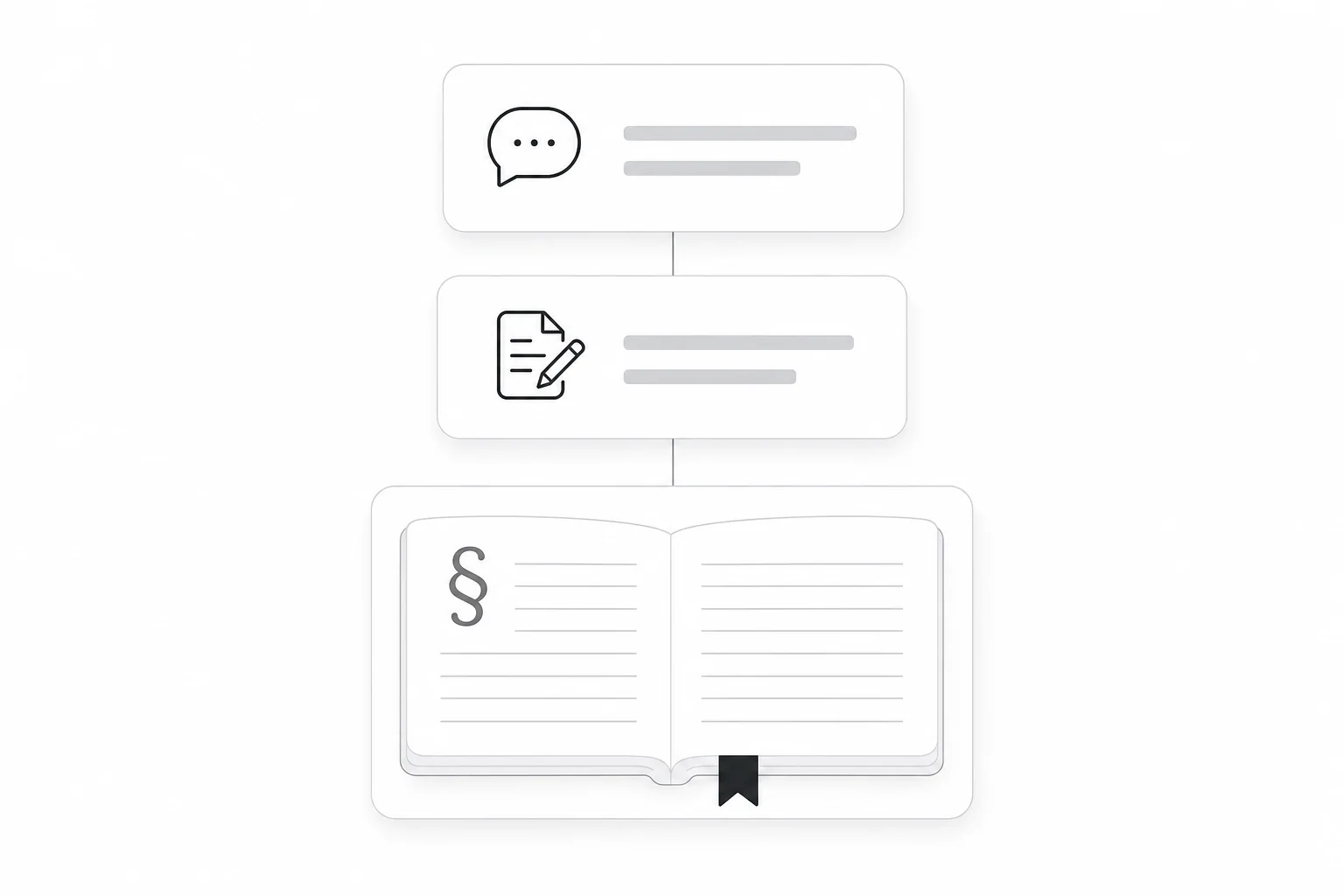
Three layers, and how to audit each one
The site is one corpus with two derived layers on top. What matters for trust is that each layer is produced differently — and can be checked differently.
Verbatim code text
- How it's made
- Ingested from each jurisdiction's officially published code, structure preserved.
- How to check it
- Read the section itself — this tier is the enacted text, not a summary.
Written guides
- How it's made
- AI-drafted from that jurisdiction's own code text, with the retrieved passages attached.
- How to check it
- Expand the source passages at the bottom of the page and compare.
Assistant answers
- How it's made
- Retrieved from the code text for the relevant jurisdiction at question time.
- How to check it
- Follow the citations — each one links to the section it was drawn from.
Where the code text comes from
The foundation is the Code Library: the verbatim enacted text of 1,199 codes, ordinances and statutes — municipal zoning codes for 540 cities and counties, the California Building Standards Code (Title 24: 12 of its 13 parts in the 2025 edition; the current Electrical Code, Part 3, is not in the library — only its superseded 2019 and 2022 editions are), the statewide housing statutes, and selected federal housing laws and regulations. Text is ingested from each jurisdiction's officially published code (the same publishers cities themselves link to), preserving the original title/chapter/section structure — 1.2 million+ sections — so every citation resolves to a stable, readable location. We do not paraphrase this tier: it is the enacted text.
How AI answers are grounded
When you ask a question, the assistant retrieves from the actual code text for the relevant jurisdiction — not from general internet knowledge — and answers with citations to the controlling sections. Citations link into the Code Library so you can read the verbatim section yourself. If the code doesn't address something, the honest answer is that it doesn't, not a guess.
01
Pin the jurisdiction
An address, parcel or city name resolves to one jurisdiction. Statewide questions stay statewide rather than silently binding to a city you happened to mention.
02
Search that jurisdiction's code
The question is matched against the actual sections of that place's code and the state codes above it — not general web knowledge, and not another city's ordinance.
03
Answer from what came back
The model writes from the retrieved sections. Quoted language comes only from text retrieved for that turn, and a search that returns nothing produces no citations at all.
04
Hand back the receipts
Citations render as deep links into the Code Library, so the section that decided the answer is one click away.
How the written guides are produced
The per-city topic guides (for example, a city's parking or ADU standards) are AI-generated drafts grounded in that specific city's code text, with the retrieved source passages listed at the bottom of each page — you can expand them to compare the guide against the ordinance language it was drawn from. Each guide shows aLast reviewed date. ADU pages work from a two-part model: the California state-law baseline that applies everywhere, plus the city's local ordinance where it goes beyond state law; a "verified" status means the page cites that city's adopted ADU ordinance and its figures are drawn from that ordinance text — like the topic guides, these profiles are compiled with AI assistance and spot-checked, not reviewed line by line by a human — while "state defaults" means the state baseline is shown because no local ordinance has been matched to the city yet.
Freshness
Codes change. Documents are re-ingested as jurisdictions publish updates, and the review/verification dates you see on guide and ADU pages reflect when that page's content was last checked — we surface the dates precisely so you can judge staleness for yourself.
Corrections
If you find an error — a wrong citation, an outdated standard, a misread ordinance —tell us. Reports go to the team directly, and corrections ship with the next content update to the affected page.
What we deliberately don't do
- Rewrite the code. The library tier keeps the jurisdiction's own wording and section numbering. If a sentence reads awkwardly, that's because the ordinance reads that way.
- Fill gaps with plausible text. When a search returns nothing usable, the answer carries no citations and says so, rather than reaching for what a typical city might require.
- Treat a state ceiling as the rule. Language like "no more than X" caps what a city may require — it isn't itself the requirement. Local ordinances are read on top of the state floor, not instead of it.
- Claim coverage we don't have. The corpus is California, and not every part of every code is in it. Pages and answers are scoped to what's actually ingested.
Limitations
GoCodebook is general information, not legal advice, and no page here replaces the judgment of your local planning and building departments — they are the final authority on how a rule applies to a specific parcel. Verify the controlling requirement with the jurisdiction before you rely on it.
Check the work yourself
The fastest way to judge any of this is to read a section and then ask a question about it. Both are open.